
About this book
Read it with a club
Chaptra's poetry and plays clubs — small groups reading the same books and talking as they go.


Shakespeare Out Loud
Poetry and plays
- 4 members
- 4 discussions
- Active 2d ago
Plays are scripts, not novels. We read them aloud, in parts, and it changes everything. This is a Chaptra house club — set up and moderated by us to get the conversation going. Open to everyone; jump in anywhere.
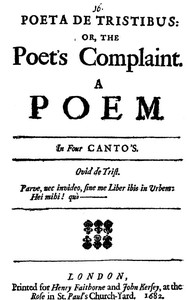
Read Poeta de Tristibus; Or, The Poet's Complaint alongside people who are reading it too.
Chaptra Prime — paid clubs, every club feature, and unlimited reading support, for $5 a month or $60 once.
See PrimeReading guide
Themes, characters and key ideas in Poeta de Tristibus; Or, The Poet's Complaint, written by Chaptra AI.
- about 8 hours
- advanced
- satirical
- humorous
- melancholy
Anonymous's "Poeta de Tristibus; Or, The Poet's Complaint" is a late 17th-century Restoration-era satirical poem that vividly portrays the struggles of poets in a society that prioritizes wealth over wit. Employing the distinctive Hudibrastic meter, the four-canto work follows a poet driven into exile by his financial woes, as he laments the lack of respect and support for his profession. The poem critiques the stark disparity between the thriving merchant class and the impoverished artist, weaving humor with poignant observations about artistic frustration and societal indifference. Through various character types like brokers and lawyers, the speaker paints a cynical picture of the competitive literary environment, ultimately contemplating the abandonment of his craft due to profound disillusionment.
“A wit's but a beggar, though his lines may shine.”
Key themes
- Poverty and Artistic Frustration
- This is the central theme, exploring the dire financial circumstances of poets and the resulting emotional and creative frustration. The poem vividly contrasts the intellectual richness of poetic endeavor with the material destitution it often brings, highlighting the personal cost of pursuing art in an unsupportive society.
- Disparity between Wit and Wealth
- The poem directly addresses the societal imbalance where intellectual prowess and artistic talent (wit) are undervalued compared to financial accumulation and commercial success (wealth). This theme is explored through direct comparisons between poets and figures like merchants and lawyers.
- Societal Critique and Satire
- The poem functions as a sharp satire of Restoration-era English society, targeting its materialism, its indifference to the arts, and the hypocrisy of its values. It critiques not just individuals but systemic issues that create an unfavorable environment for intellectual and artistic flourishing.
Worth discussing
How does the Hudibrastic meter contribute to the poem's satirical and humorous tone?
Chapter-by-chapter breakdowns, character arcs and the full thematic analysis come with a free account.
Discussions
No one has started one yet
Questions this book opens up
No discussions yet
Be the first to start a discussion about this book!
Sign up to start the discussionReviews
No reviews yet
Be the first to review this book!