
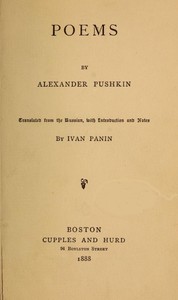
Poems: With Introduction and Notes
Written by Aleksandr Sergeevich Pushkin
Chaptra reads alongside you — AI insights, chapter breakdowns and reader discussions for every book. Join free
About this book
Reading guide
Themes, characters and key ideas in Poems: With Introduction and Notes, written by Chaptra AI.
- about 8 hours
- intermediate
- romantic
- reflective
- melancholy
Aleksandr Sergeevich Pushkin's "Poems: With Introduction and Notes" is a vital anthology showcasing the early 19th-century Russian poet's profound exploration of love, nature, and the human condition. Through a diverse range of autobiographical, narrative, and lyrical forms, Pushkin masterfully captures deep emotions and universal sentiments in beautifully crafted verses. The collection is enriched by an introduction from translator Ivan Panin, which not only contextualizes Pushkin's work but also delves into his artistic ideals, spontaneity, and emotional depth. Panin's preface highlights key thematic concerns such as self-reflection, the burdens of regret, and the intrinsic link between the artist and their creation, setting the stage for a comprehensive appreciation of Pushkin's complex poetic voice.
“I loved you; and the love, perhaps, is yet / Within my soul, but let it not upset / You any more...”
Key themes
- Love and Passion
- Pushkin explores love in its myriad forms: romantic love, unrequited love, nostalgic love for past affections, and the intense, often painful, emotions associated with desire and attachment. His poems capture both the ecstasy and the torment of love, often with a deeply personal and confessional tone, highlighting its transformative and sometimes destructive power.
- The Artist and Creation
- This theme delves into the nature of artistic inspiration, the poet's role in society, and the legacy of creative work. Pushkin reflects on the burden and blessing of genius, the relationship with his Muse, and his desire for his poetry to achieve immortality. It encompasses the internal struggles and ultimate triumph of the creative spirit.
- Nature and the Human Experience
- Pushkin frequently uses the natural world as a backdrop for human emotions and philosophical contemplation. Nature can be a source of solace, beauty, and inspiration, mirroring the poet's inner state or providing a stark contrast to human transience. This theme often intertwines with reflections on life, death, and the cycle of existence.
Worth discussing
How does Ivan Panin's introduction shape your understanding and appreciation of Pushkin's poetry before you even begin reading the poems themselves?
Chapter-by-chapter breakdowns, character arcs and the full thematic analysis come with a free account.
Discussions
No one has started one yet
Questions this book opens up
No discussions yet
Be the first to start a discussion about this book!
Sign up to start the discussionReviews
No reviews yet
Be the first to review this book!