
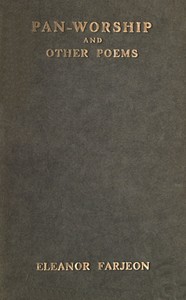
Pan-Worship, and Other Poems
Written by Eleanor Farjeon
Chaptra reads alongside you — AI insights, chapter breakdowns and reader discussions for every book. Join free
About this book
Reading guide
Themes, characters and key ideas in Pan-Worship, and Other Poems, written by Chaptra AI.
- about 8 hours
- intermediate
- lyrical
- nostalgic
- contemplative
Eleanor Farjeon's "Pan-Worship, and Other Poems" is an early 20th-century poetry collection deeply rooted in nature, classical mythology, and the complexities of the human experience. Through lyrical verse and rich imagery, Farjeon invites readers into imaginative landscapes where the natural world intertwines with ancient myths. The collection explores themes of love, loss, the passage of time, and the eternal beauty of nature, often reflecting a nostalgic appreciation for classical figures and a yearning for connection with the wild. Each poem contributes to a vibrant tapestry of emotions and observations, showcasing the poet's profound sensitivity and intricate craftsmanship. Ultimately, it celebrates the interconnectedness of life, beauty, and the universe, offering both serenity and poignant reflection.
“"Oh, Pan, where are thy reeds, thy pipes, thy dance? / The world grows old, and loses its romance."”
Key themes
- Nature's Eternal Beauty and Power
- This theme is central to the collection, portraying nature not just as a backdrop but as a living, breathing entity with its own spiritual force and eternal cycle. Farjeon celebrates the changing seasons, forests, rivers, and wild creatures as sources of solace, inspiration, and profound truth. Nature is often personified, reflecting human emotions and providing a mirror for the human experience, suggesting a deep interconnectedness.
- Classical Mythology and Nostalgia
- Farjeon frequently draws upon classical Greek and Roman mythology, particularly the figure of Pan, to explore themes of wildness, primal instinct, and a yearning for a lost, more harmonious past. This reflects a nostalgic sentiment for ancient times when humanity was perhaps more attuned to nature and the spiritual world. Mythology provides a rich symbolic language through which to articulate desires and observations that transcend the mundane.
- The Passage of Time and Mortality
- The collection deeply engages with the concept of time—its relentless forward motion, its ability to bring both growth and decay, and its impact on memory and human experience. Farjeon reflects on the ephemeral nature of life, the beauty of fleeting moments, and the inevitability of change and loss. This theme is often interwoven with natural cycles, where the seasons symbolize different stages of life and the passage of time.
Worth discussing
How does Farjeon's depiction of nature reflect or diverge from romantic poetic traditions?
Chapter-by-chapter breakdowns, character arcs and the full thematic analysis come with a free account.
Discussions
No one has started one yet
Questions this book opens up
No discussions yet
Be the first to start a discussion about this book!
Sign up to start the discussionReviews
No reviews yet
Be the first to review this book!