
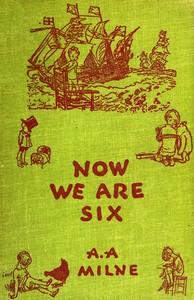
Now we are six
Written by A. A. (Alan Alexander) Milne
Chaptra reads alongside you — AI insights, chapter breakdowns and reader discussions for every book. Join free
About this book
Reading guide
Themes, characters and key ideas in Now we are six, written by Chaptra AI.
- about 3 hours
- beginner
- uplifting
- humorous
- nostalgic
A. A. Milne's "Now We Are Six" is a cherished collection of children's poetry that serves as a delightful continuation of the imaginative world introduced in "When We Were Very Young." Through whimsical verse and the endearing presence of characters like Christopher Robin and Winnie-the-Pooh, the book tenderly explores the everyday adventures, musings, and emotional landscape of a child on the cusp of six years old. It celebrates the innocence, boundless imagination, and simple joys of early childhood, inviting readers into a world where toys come alive and the ordinary is imbued with extraordinary wonder. The poems, beautifully complemented by E. H. Shepard's iconic illustrations, capture a universal sense of nostalgia while offering profound insights into a child's perspective on life, friendship, and the subtle shifts of growing up.
“But now I am Six, I'm as clever as clever. So I think I'll be six now for ever and ever.”
Key themes
- Innocence and Imagination of Childhood
- This is the overarching theme, celebrating the boundless creativity and unique perspective of a child. The poems consistently transform ordinary objects and situations into extraordinary adventures through the power of imagination, highlighting how children construct their own rich inner worlds.
- Friendship and Companionship
- The deep bonds between Christopher Robin and his animal friends (especially Pooh) are central to the collection. The poems explore loyalty, shared adventures, mutual understanding, and the comfort found in companionship, both real and imagined, during childhood.
- The Passage of Time and Growing Up
- The title itself, 'Now We Are Six,' explicitly addresses the concept of aging and the transition from one stage of childhood to another. While celebrating the present moment, many poems subtly acknowledge the fleeting nature of childhood and the inevitable march towards growing older, often with a touch of wistfulness.
Worth discussing
How does Milne capture the unique perspective and logic of a child in these poems?
Chapter-by-chapter breakdowns, character arcs and the full thematic analysis come with a free account.
Discussions
No one has started one yet
Questions this book opens up
No discussions yet
Be the first to start a discussion about this book!
Sign up to start the discussionReviews
No reviews yet
Be the first to review this book!