
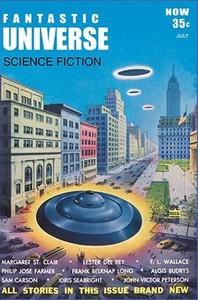
No star's land
Written by Joseph Samachson
Chaptra reads alongside you — AI insights, chapter breakdowns and reader discussions for every book. Join free
About this book
Reading guide
Themes, characters and key ideas in No star's land, written by Chaptra AI.
- about 7 hours
- intermediate
- tense
- existential
- resilient
In William Morrison's mid-20th century science fiction novel, "No Star's Land," newlywed astronauts Jan and Karin find their relationship and survival tested when their ship inexplicably halts between two warring cosmic entities. Trapped in a perilous zone, they grapple with their perceived insignificance against the backdrop of a colossal stellar conflict, forcing them to confront existential fears and the limits of human resilience. Jan's ingenious plan, born from observing the stars' 'ignorance,' offers a desperate chance at escape, ultimately reaffirming their bond and redefining their understanding of love amidst cosmic chaos. The narrative explores themes of scale, human ingenuity, and the enduring power of partnership.
“"We are but dust motes dancing in the fury of giants, yet even dust can carry a spark."”
Key themes
- Misperception of Size and Power
- This theme explores how scale influences perception and capability. The enormous warring stars are depicted as powerful but 'ignorant' of smaller entities, while humans, though physically tiny, possess superior intellect and cunning. It challenges the notion that physical might equals ultimate power or intelligence.
- Resilience of the Human Spirit
- Despite being confronted with seemingly insurmountable odds and existential dread, Jan and Karin demonstrate remarkable fortitude, adaptability, and an unwavering will to survive. The theme highlights humanity's capacity to endure, innovate, and find hope in the direst circumstances.
- Love and Partnership
- The cosmic ordeal serves as a crucible for Jan and Karin's newlywed relationship. Initially tested and strained by the extreme pressure, their shared experience ultimately rekindles and deepens their bond, transforming their love into a more profound and resilient partnership.
Worth discussing
How does the novel challenge our perception of size and power, and what does it suggest about humanity's place in the universe?
Chapter-by-chapter breakdowns, character arcs and the full thematic analysis come with a free account.
Discussions
No one has started one yet
Questions this book opens up
No discussions yet
Be the first to start a discussion about this book!
Sign up to start the discussionReviews
No reviews yet
Be the first to review this book!