
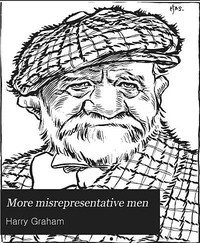
More Misrepresentative Men
Written by Harry Graham
Chaptra reads alongside you — AI insights, chapter breakdowns and reader discussions for every book. Join free
About this book
Reading guide
Themes, characters and key ideas in More Misrepresentative Men, written by Chaptra AI.
- about 8 hours
- intermediate
- humorous
- witty
- satirical
Harry Graham's "More Misrepresentative Men" is a delightful early 20th-century collection of satirical verse, serving as a humorous continuation of his earlier works. Through witty and cleverly rhymed poems, Graham playfully skewers a diverse array of historical and contemporary figures, from Henry VIII and Robert Burns to Andrew Carnegie and Sherlock Holmes. Each poem offers a light-hearted yet insightful critique of its subject's life, legacy, or public persona, exposing human foibles and societal norms with an engaging, observational tone. The book masterfully blends humor with sharp social commentary, providing readers with an entertaining and thought-provoking look at the celebrated and the familiar through a uniquely satirical lens.
“He wore a frown, a kingly scowl, And changed his wives with frequent howl.”
Key themes
- The Folly of Human Nature
- This theme is central to the entire collection, as Graham consistently highlights the inherent flaws, absurdities, and idiosyncrasies that define humanity. Whether it's the vanity of a monarch or the eccentricities of a genius, the poems reveal a shared human tendency towards self-importance, misguided ambition, or peculiar habits.
- Critique of Power and Status
- Graham frequently uses figures of high status (kings, industrialists, revered poets) to playfully critique the nature of power, wealth, and celebrity. The satire often aims to deflate grandiosity and remind readers that even the most influential figures are ultimately human and subject to ridicule.
- The Power and Pleasure of Satire
- Beyond the specific subjects, the book itself is a testament to the enduring power of satire as a literary device. Graham demonstrates how humor, wit, and clever verse can be used not just for entertainment, but also as a gentle yet effective tool for social commentary, critique, and revealing truths about human nature.
Worth discussing
How does Graham's use of 'misrepresentation' serve to illuminate or critique the actual historical figures?
Chapter-by-chapter breakdowns, character arcs and the full thematic analysis come with a free account.
Discussions
No one has started one yet
Questions this book opens up
No discussions yet
Be the first to start a discussion about this book!
Sign up to start the discussionReviews
No reviews yet
Be the first to review this book!