
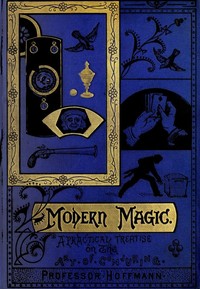
Modern Magic: A Practical Treatise on the Art of Conjuring
Written by Professor Hoffmann
Chaptra reads alongside you — AI insights, chapter breakdowns and reader discussions for every book. Join free
About this book
Reading guide
Themes, characters and key ideas in Modern Magic: A Practical Treatise on the Art of Conjuring, written by Chaptra AI.
- about 20 hours
- intermediate
- instructive
- detailed
- reflective
Professor Hoffmann's "Modern Magic: A Practical Treatise on the Art of Conjuring" is a foundational late 19th-century guide to sleight-of-hand and magical performance. It systematically covers a broad spectrum of tricks, from card and coin manipulations to various object-based illusions, providing detailed, practical instructions for aspiring conjurers. Beyond mere technique, Hoffmann also delves into the historical context and philosophy of magic, advocating for rigorous practice and persistence as essential for mastering the craft. The treatise begins with an overview of magic's importance and the scarcity of quality literature, then progresses to foundational skills and essential tools, balancing accessible guidance with the encouragement of personal growth and dedication. It stands as a comprehensive educational resource aimed at transforming enthusiasts into proficient performers.
“"The importance of the art of conjuring, as a source of harmless amusement and intellectual gratification, can hardly be overrated."”
Key themes
- Mastery Through Dedication
- This is a central theme, constantly emphasized by Hoffmann. The book is not merely a collection of tricks but a testament to the idea that true mastery in any art, especially one requiring precise motor skills and psychological acumen like magic, can only be achieved through relentless practice, patience, and unwavering dedication. Hoffmann assures readers that impressive illusions are attainable, but only with significant personal investment.
- The Art of Illusion and Perception
- Hoffmann's treatise delves into the core mechanics of illusion, exploring how a magician manipulates an audience's perception to create wonder. This theme examines the psychological principles behind misdirection, timing, and presentation, demonstrating how the mind can be led astray by skillful artistry. It's not just about hiding a secret but about crafting an experience where the impossible seems real.
- The Legacy and Professionalization of Magic
- Hoffmann's work implicitly champions the elevation of magic from mere street performance or parlour trickery to a respected art and science. By providing a comprehensive, systematic guide, he contributes significantly to the professionalization of the craft, establishing standards for instruction and performance. He also reflects on the history of magic, positioning his work within a lineage of performers and innovators.
Worth discussing
How does Hoffmann's emphasis on practice and persistence resonate with learning any complex skill or art form today?
Chapter-by-chapter breakdowns, character arcs and the full thematic analysis come with a free account.
Discussions
No one has started one yet
Questions this book opens up
No discussions yet
Be the first to start a discussion about this book!
Sign up to start the discussionReviews
No reviews yet
Be the first to review this book!