
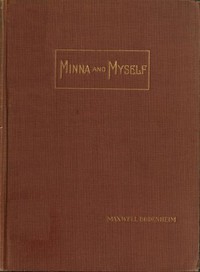
Minna and Myself
Written by Maxwell Bodenheim
Chaptra reads alongside you — AI insights, chapter breakdowns and reader discussions for every book. Join free
About this book
Reading guide
Themes, characters and key ideas in Minna and Myself, written by Chaptra AI.
- about 8 hours
- advanced
- melancholy
- introspective
- lyrical
Maxwell Bodenheim's "Minna and Myself" is an early 20th-century collection of lyrical poetry and one-act plays, offering a profound exploration of human emotion, beauty, and mortality. The work is structured into distinct sections: "Minna" dedicates itself to passionate verses of longing and admiration for a beloved muse, while "Myself" delves into introspective themes of identity, existentialism, and the inevitability of death. Complementing these poetic reflections are two one-act plays, "The Master Poisoner" and "Poet's Heart," which introduce dramatic dialogue to further juxtapose life's delicate nature with its ultimate end. Through vivid imagery and varied forms, Bodenheim invites readers to contemplate the intricate relationship between love, aesthetic appreciation, and the ever-present shadow of death.
“"Her beauty, a fragile bloom, whispered of seasons gone too soon."”
Key themes
- Love and Beauty
- This theme is central to the 'Minna' section, where love is depicted as a profound and often painful experience, intertwined with the appreciation of beauty. Bodenheim explores the ecstatic and melancholic aspects of adoration, the longing for an idealized figure, and the way beauty can inspire art while also being inherently transient.
- Mortality and Death
- A pervasive theme throughout the collection, particularly in 'Myself' and the plays. Bodenheim confronts the inevitability of death, not always with dread, but often with a thoughtful, reflective, and sometimes melancholic acceptance. It serves as a backdrop against which life's beauty and human endeavors gain their poignancy.
- Identity and Self-Reflection
- Primarily explored in the 'Myself' section, this theme delves into the speaker's internal world, questioning who they are, their place in the universe, and the nature of consciousness. It's a journey of introspection, often marked by a struggle to define the self amidst existential uncertainties.
Worth discussing
How does Bodenheim use the figure of Minna to explore broader themes of beauty, love, and transience?
Chapter-by-chapter breakdowns, character arcs and the full thematic analysis come with a free account.
Discussions
No one has started one yet
Questions this book opens up
No discussions yet
Be the first to start a discussion about this book!
Sign up to start the discussionReviews
No reviews yet
Be the first to review this book!