
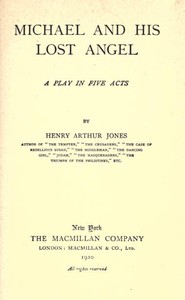
Michael and His Lost Angel: A Play in Five Acts
Written by Henry Arthur Jones
Chaptra reads alongside you — AI insights, chapter breakdowns and reader discussions for every book. Join free
About this book
Read it with a club
Chaptra's poetry and plays clubs — small groups reading the same books and talking as they go.


Shakespeare Out Loud
Poetry and plays
- 4 members
- 4 discussions
- Active 2d ago
Plays are scripts, not novels. We read them aloud, in parts, and it changes everything. This is a Chaptra house club — set up and moderated by us to get the conversation going. Open to everyone; jump in anywhere.
Read Michael and His Lost Angel: A Play in Five Acts alongside people who are reading it too.
Chaptra Prime — paid clubs, every club feature, and unlimited reading support, for $5 a month or $60 once.
See PrimeReading guide
Themes, characters and key ideas in Michael and His Lost Angel: A Play in Five Acts, written by Chaptra AI.
- about 5 hours
- intermediate
- Dramatic
- Tragic
- Moralistic
Henry Arthur Jones's "Michael and His Lost Angel" is a compelling late 19th-century drama that delves into the profound internal and external conflicts of Reverend Michael Feversham, a man dedicated to rigid asceticism and moral purity. The play charts his descent from an unyielding spiritual idealist, who publicly condemns a fallen parishioner, into a passionate, forbidden affair with the enigmatic and alluring Audrie Lesden. This transgression forces Michael to confront the hypocrisy inherent in his own moral code and the complex interplay between spiritual aspirations and human desire. Ultimately, the play explores the devastating consequences of societal judgment, the search for true redemption, and the impossibility of reconciling absolute ideals with the messy realities of human nature.
“My soul is a temple, not a marketplace for fleeting desires. It must be kept pure, for God and for man.”
Key themes
- Morality and Hypocrisy
- The central theme, exploring the conflict between outwardly professed moral purity and internal human frailty. Michael's initial condemnation of Rose Gibbard and his subsequent fall into an illicit affair starkly expose the hypocrisy inherent in rigid moral systems and the dangers of judging others without self-awareness.
- Spiritual vs. Carnal Love
- This theme explores the tension between ascetic spiritual aspirations and the powerful, often forbidden, desires of the flesh. Michael's struggle is a microcosm of this conflict, as his devout celibacy is challenged by his intense attraction to Audrie, who embodies a more holistic, passionate form of love.
- Redemption and Forgiveness
- The play deeply questions the nature of true redemption—whether it is achieved through public penance, private suffering, or genuine change of heart. It also examines the societal capacity for forgiveness, particularly when moral transgressions involve figures of authority.
Worth discussing
Discuss Michael Feversham's initial moral rigidity. Was it admirable or fundamentally flawed?
Chapter-by-chapter breakdowns, character arcs and the full thematic analysis come with a free account.
Discussions
No one has started one yet
Questions this book opens up
No discussions yet
Be the first to start a discussion about this book!
Sign up to start the discussionReviews
No reviews yet
Be the first to review this book!