
Chaptra
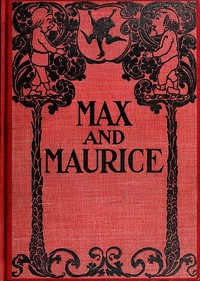
Cover of Max and Maurice: A Juvenile History in Seven Tricks

Max and Maurice: A Juvenile History in Seven Tricks

Written by Wilhelm Busch

Not rated yet — tap a star to review it

Chaptra reads alongside you — AI insights, chapter breakdowns and reader discussions for every book. Join free

About this book

"Max and Maurice: A Juvenile History in Seven Tricks" by Wilhelm Busch is a whimsical children's book written in the late 19th century. This notable work is illustrated and presented in rhymed verses, narrating the mischievous adventures of two boys, Max and Maurice, who delight in playing pranks that lead to unexpected and often comical consequences. The book explores themes of childhood folly and the repercussions of unruly behavior, blending humor with moral lessons in a manner that appeals to both children and adults. In this engaging tale, the story unfolds through seven tricks that Max and Maurice devise, each more daring than the last. From teasing a widow to causing trouble for a tailor and a baker, the boys gleefully engage in antics that end up causing distress to the townsfolk. However, their mischievous actions culminate in a series of unfortunate events, leading to their ultimate downfall as they fall victim to their schemes. Through clever rhymes and vibrant illustrations, Busch captures the essence of childhood mischief while imparting a cautionary message about the importance of civility and the consequences of one’s actions.

Reading guide

Themes, characters and key ideas in Max and Maurice: A Juvenile History in Seven Tricks, written by Chaptra AI.

  • about 8 hours
  • intermediate
  • humorous
  • cautionary
  • satirical

Wilhelm Busch's "Max and Maurice: A Juvenile History in Seven Tricks" is a foundational work of illustrated verse, chronicling the escalating misadventures of two incorrigibly mischievous boys in a quaint German village. Through seven distinct pranks, Max and Maurice torment various townsfolk, from a widow and a tailor to a baker, their escapades blending slapstick humor with a darker undercurrent of escalating malice. The book masterfully combines rhymed couplets with vivid, sequential illustrations, pioneering a form that prefigures modern comic strips and graphic novels. Ultimately, their unchecked mischief leads to a grim but humorously presented comeuppance, delivering a stark cautionary tale about the consequences of unruly behavior and the demands of social order.

Ach, was muss ich oft von Neid / Hören über Max und Moritz!

Key themes

Consequences of Mischief / Unruly Behavior
This is the central theme, explored through the escalating nature of Max and Maurice's pranks and the increasingly severe repercussions. Each trick leads to more significant damage or distress, ultimately culminating in their own gruesome end, serving as a stark warning about the dangers of unchecked misbehavior.
Retributive Justice / Poetic Justice
The story strongly emphasizes the idea that punishment should fit the crime, often in a literal and darkly humorous way. The boys' end—being ground into meal—is a direct, albeit exaggerated, consequence of their destructive actions, particularly their interference with Farmer Mecke's grain and the miller's work. The narrative ensures that the 'bad' characters receive a definitive, ultimate punishment.
Satire and Dark Humor
Busch employs satire and dark humor throughout the narrative, using exaggeration and irony to deliver his moral lessons. The absurdity of the pranks, the caricatured reactions of the victims, and the over-the-top nature of the boys' final punishment all contribute to a comedic tone that allows the reader to engage with the otherwise harsh themes. The humor often arises from the disconnect between the innocent appearance of the boys and the severity of their actions.

Worth discussing

To what extent is the humor in 'Max and Maurice' a defense mechanism against its darker themes, and how does it affect the overall message?

Chapter-by-chapter breakdowns, character arcs and the full thematic analysis come with a free account.

Discussions

No one has started one yet

Join

Questions this book opens up

No discussions yet

Be the first to start a discussion about this book!

Sign up to start the discussion

Reviews

No reviews yet

Be the first to review this book!