
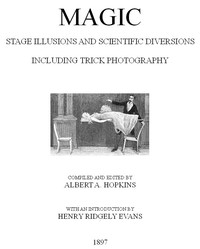
Magic, Stage Illusions and Scientific Diversions, Including Trick Photography
Written by Albert A. (Albert Allis) Hopkins
Chaptra reads alongside you — AI insights, chapter breakdowns and reader discussions for every book. Join free
About this book
Reading guide
Themes, characters and key ideas in Magic, Stage Illusions and Scientific Diversions, Including Trick Photography, written by Chaptra AI.
- about 20 hours
- advanced
- informative
- educational
- curious
Albert A. Hopkins's 'Magic, Stage Illusions and Scientific Diversions, Including Trick Photography' is a seminal late 19th-century compendium that meticulously explores the art of stage magic through a scientific lens. The book demystifies famous illusions by explaining the underlying principles of optics, mechanics, and electricity, showcasing the harmonious blend of artistry and scientific ingenuity. It offers historical context, detailed descriptions of various tricks, and insights into the methods of renowned conjurers. Essentially, it serves as an educational and entertaining journey into the world of illusion, illustrating magic as a sophisticated application of scientific knowledge, including early forms of visual trickery via photography.
“The unique niche this work fills in the literature of magic is its attempt to demystify stage illusions through scientific explanations.”
Key themes
- The Intersection of Science and Art
- This is the central theme of the book, demonstrating how seemingly disparate fields — the rigorous, empirical world of science and the creative, expressive realm of art — converge in the performance of stage magic. Hopkins meticulously illustrates how optical illusions, mechanical contraptions, and electrical phenomena are not merely scientific curiosities but are purposefully employed to create aesthetic wonder and artistic deception.
- Deception and Perception
- The book inherently explores the psychology of deception, not just how to perform a trick, but *why* it works on the audience. It delves into how the human mind perceives reality, how it can be led astray by misdirection, and how limitations in perception can be exploited to create illusions. It's about understanding the audience's expectations and sensory inputs to manipulate their experience of reality.
- The Evolution of Entertainment and Technology
- Hopkins's work captures a specific historical moment when stage magic was a primary form of grand public entertainment, directly influenced by the rapid technological advancements of the Industrial Revolution. The book illustrates how innovations in mechanics, electricity, and optics were quickly adapted and integrated into theatrical performances, showcasing a dynamic interplay between technological progress and the demands of public spectacle.
Worth discussing
How does Hopkins's demystification of magic through science alter the reader's perception of wonder and mystery?
Chapter-by-chapter breakdowns, character arcs and the full thematic analysis come with a free account.
Discussions
No one has started one yet
Questions this book opens up
No discussions yet
Be the first to start a discussion about this book!
Sign up to start the discussionReviews
No reviews yet
Be the first to review this book!