
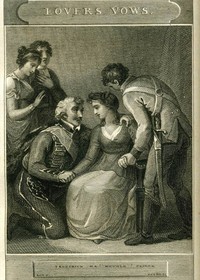
Lovers' Vows
Written by Mrs. Inchbald,August von Kotzebue
Chaptra reads alongside you — AI insights, chapter breakdowns and reader discussions for every book. Join free
About this book
Read it with a club
Chaptra's poetry and plays clubs — small groups reading the same books and talking as they go.


Shakespeare Out Loud
Poetry and plays
- 4 members
- 4 discussions
- Active Sep 11
Plays are scripts, not novels. We read them aloud, in parts, and it changes everything. This is a Chaptra house club — set up and moderated by us to get the conversation going. Open to everyone; jump in anywhere.
Read Lovers' Vows alongside people who are reading it too.
Chaptra Prime — paid clubs, every club feature, and unlimited reading support, for $5 a month or $60 once.
See PrimeReading guide
Themes, characters and key ideas in Lovers' Vows, written by Chaptra AI.
- about 8 hours
- intermediate
- melodramatic
- poignant
- moralistic
Mrs. Inchbald's 'Lovers' Vows,' an adaptation of Kotzebue's German play, is a poignant early 19th-century drama exploring themes of love, family, and societal expectations. The narrative centers on Agatha, a destitute mother, and her son Frederick, who, upon learning of his illegitimate birth and his father's identity as the wealthy Baron Wildenhaim, embarks on a quest for recognition and justice. This quest dramatically intertwines with the Baron's own life, particularly his daughter Amelia's romantic entanglement with the virtuous tutor, Anhalt, and her arranged marriage to the foppish Count Cassel. The play culminates in a powerful exploration of forgiveness, redemption, and the dismantling of social prejudices in favor of genuine human connection and familial duty.
“"My son! My Frederick! Heaven has not quite deserted me!"”
Key themes
- Illegitimacy and Social Stigma
- This theme is central to the entire play, driving the conflict and defining Agatha and Frederick's plight. It explores the severe social and economic consequences of being born out of wedlock in the early 19th century, particularly for the mother and child, who face destitution and ostracization.
- Familial Duty and Forgiveness
- The play deeply explores the duties owed between parents and children, both from the perspective of filial piety (Frederick's devotion to Agatha) and parental responsibility (the Baron's eventual acceptance of Frederick). Forgiveness, particularly from Agatha and Frederick towards the Baron, is presented as a crucial step towards reconciliation and moral redemption.
- Social Class and Injustice
- The stark contrast between the wealthy aristocracy (Baron Wildenhaim, Count Cassel) and the impoverished commoners (Agatha, Frederick) highlights the social injustices prevalent in the era. The play critiques the privilege that allows the upper class to evade responsibility and the suffering it inflicts on those below them.
Worth discussing
How does the play address the societal stigma of illegitimacy in the early 19th century?
Chapter-by-chapter breakdowns, character arcs and the full thematic analysis come with a free account.
Discussions
No one has started one yet
Questions this book opens up
No discussions yet
Be the first to start a discussion about this book!
Sign up to start the discussionReviews
No reviews yet
Be the first to review this book!