
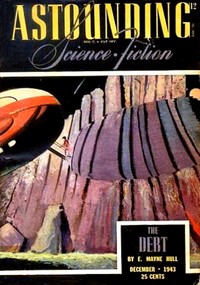
Lost Art
Written by George O. (George Oliver) Smith
Chaptra reads alongside you — AI insights, chapter breakdowns and reader discussions for every book. Join free
About this book
Reading guide
Themes, characters and key ideas in Lost Art, written by Chaptra AI.
- about 8 hours
- intermediate
- mysterious
- adventurous
- humorous
George O. Smith's early 1940s science fiction novella, "Lost Art," transports readers to a futuristic Mars where Terran explorers Barney Carroll and Jim Baler stumble upon remnants of an ancient Martian civilization. Their discovery centers on a mysterious beam tower and a complex technical manual, initially mistaken for a simple signal device. Through a series of humorous misadventures and accidental citywide power disruptions, the duo gradually deciphers the lost technology. Ultimately, they realize the device's true purpose: long-distance wireless power transmission, leading to profound reflections on the cyclical nature of knowledge and the challenges of technological rediscovery across civilizations and time.
“What was once common knowledge to them, is a lost art to us.”
Key themes
- Technological Evolution and the Cyclical Nature of Knowledge
- This theme explores the idea that scientific and technological progress is not always linear. Advanced knowledge can be 'lost' to future generations, only to be rediscovered later. The Martian beam tower represents a pinnacle of technology that humanity's future self had forgotten, highlighting the fragility of knowledge transmission across millennia and the potential for civilizations to rise, fall, and leave behind enigmas.
- Human Ingenuity and Perseverance in Discovery
- Despite initial failures, comedic mishaps, and the sheer complexity of the alien technology, Barney and Jim demonstrate remarkable persistence and problem-solving skills. This theme celebrates the human drive to understand the unknown, to experiment, and to learn from mistakes, showcasing the often-messy but ultimately rewarding process of scientific discovery.
- The Nature of Communication and Translation
- Beyond simply understanding a device, the story subtly explores the profound challenges of translating not just a language, but an entire technological and conceptual framework from one civilization to another, or even across vast stretches of time within the same species. It's not just about decoding symbols, but about grasping the underlying paradigm.
Worth discussing
How does 'Lost Art' explore the idea of technological cycles, rather than linear progress?
Chapter-by-chapter breakdowns, character arcs and the full thematic analysis come with a free account.
Discussions
No one has started one yet
Questions this book opens up
No discussions yet
Be the first to start a discussion about this book!
Sign up to start the discussionReviews
No reviews yet
Be the first to review this book!