
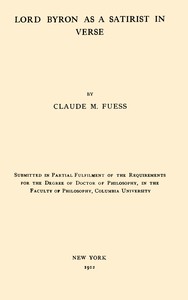
Lord Byron as a satirist in verse
Written by Claude Moore Fuess
Chaptra reads alongside you — AI insights, chapter breakdowns and reader discussions for every book. Join free
About this book
Reading guide
Themes, characters and key ideas in Lord Byron as a satirist in verse, written by Chaptra AI.
- about 10 hours
- advanced
- scholarly
- analytical
- informative
Claude Moore Fuess's "Lord Byron as a Satirist in Verse" is an early 20th-century scholarly monograph dedicated to a focused analysis of Lord Byron's significant contributions to satirical poetry. The book aims to address a perceived gap in existing literary scholarship by specifically examining the characteristics, development, and unique spirit of Byron's satirical verse, often disentangling it from his widely chronicled personal life. Fuess introduces the work by acknowledging the complex relationship between Byron's experiences and his satirical output, while asserting the need for a deeper, more analytical look at his poetic critiques. The study meticulously delineates the defining features of Byron's satire, exploring his use of humor, his role in exposing societal flaws, and his critiques of contemporary figures and literary movements within the broader English literary tradition.
“"While many have chronicled his life and literary output, his satirical verses remain insufficiently analyzed."”
Key themes
- Byron's Satirical Genius and Development
- This is the core theme, exploring the unique characteristics of Byron's satirical voice, his targets, techniques, and how his satirical prowess evolved throughout his career. Fuess emphasizes Byron's distinct contribution to the genre.
- The Nature of Satire
- Fuess opens his work by grappling with the elusive definition of satire itself, exploring its mechanisms, purposes, and the role of humor in its effectiveness. This theme is central to establishing the critical framework through which Byron's works are subsequently analyzed.
- Critique of Societal and Literary Flaws
- Fuess demonstrates how Byron used satire not just for personal attacks, but as a powerful vehicle for exposing hypocrisy, pretension, and corruption within society, politics, and the literary establishment of his time.
Worth discussing
How does Fuess define satire, and how effectively does this definition apply to Byron's work?
Chapter-by-chapter breakdowns, character arcs and the full thematic analysis come with a free account.
Discussions
No one has started one yet
Questions this book opens up
No discussions yet
Be the first to start a discussion about this book!
Sign up to start the discussionReviews
No reviews yet
Be the first to review this book!