
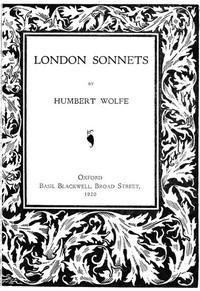
London Sonnets
Written by Humbert Wolfe
Chaptra reads alongside you — AI insights, chapter breakdowns and reader discussions for every book. Join free
About this book
Reading guide
Themes, characters and key ideas in London Sonnets, written by Chaptra AI.
- about 8 hours
- intermediate
- poignant
- reflective
- evocative
Humbert Wolfe's "London Sonnets" is an early 20th-century collection offering a lyrical and poignant exploration of London's urban landscape and its inhabitants. Through a series of sonnets, Wolfe captures the city's essence, reflecting on universal themes of love, life, and the human experience. The collection transitions from vivid depictions of specific London locales and social observations to deeper meditations on personal loss and the profound impact of war. Rich in evocative language and social commentary, the work provides a thoughtful portrayal of an ever-changing metropolis, highlighting both its inherent beauty and underlying sorrows.
“The fog-kissed lamp, a lonely, golden eye, / Watches the silent passage of the crowd.”
Key themes
- Urban Life and Identity
- Wolfe profoundly explores how London shapes and reflects the identities of its inhabitants. The city is presented not just as a backdrop but as a living entity that influences personal experiences, communal bonds, and individual resilience. The sonnets capture the unique rhythm, sights, and sounds of the metropolis, showing how people find their place within its vastness.
- Love and Loss
- Central to the human experience depicted in the sonnets are the intertwined themes of love and loss. Wolfe explores the tenderness of affection, the beauty of human connection, and the inevitable sorrow that accompanies separation, whether through personal tragedy or the broader impact of historical events. These themes are often rendered with deep emotional resonance.
- The Impact of War
- Reflecting its early 20th-century publication, the collection delves into the profound and often devastating impact of war, both on individuals and on the collective psyche of the city. Wolfe captures the grief, the sense of irreversible change, and the lingering shadow that conflict casts over everyday life, even far from the battlefield.
Worth discussing
How does Wolfe use the sonnet form to explore the complexities of urban life in early 20th-century London?
Chapter-by-chapter breakdowns, character arcs and the full thematic analysis come with a free account.
Discussions
No one has started one yet
Questions this book opens up
No discussions yet
Be the first to start a discussion about this book!
Sign up to start the discussionReviews
No reviews yet
Be the first to review this book!