
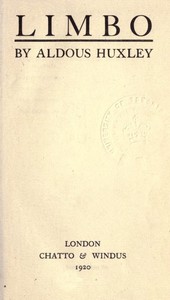
Limbo
Written by Aldous Huxley
Chaptra reads alongside you — AI insights, chapter breakdowns and reader discussions for every book. Join free
About this book
Reading guide
Themes, characters and key ideas in Limbo, written by Chaptra AI.
- about 8 hours
- advanced
- introspective
- melancholic
- philosophical
Aldous Huxley's "Limbo" chronicles the formative years of Dick Greenow, an intellectually brilliant but emotionally conflicted young man, as he navigates the tumultuous landscape of self-discovery and societal expectations in the early 20th century. The narrative intricately explores Dick's internal world, marked by a profound sense of discontent and an unreciprocated romantic longing for his peer, Francis Quarles. Through his academic pursuits, particularly in mathematics, Dick seeks solace and order, yet continually grapples with the burgeoning complexities of his identity and sexuality. The novel is a poignant exploration of the struggle between personal aspirations and the roles society attempts to impose, ultimately depicting the intricate dynamics of human relationships and the often-painful journey toward understanding oneself.
“The equations, at least, offered a solace of certainty that human emotions perpetually denied.”
Key themes
- Self-Discovery and Identity
- This theme explores Dick Greenow's arduous journey to understand who he is, separate from societal expectations and his own intellectual pursuits. It delves into the internal conflicts of adolescence and early adulthood, focusing on the formation of personal identity amidst emotional complexity and burgeoning desires. The 'limbo' state reflects his prolonged period of uncertainty and internal exploration.
- Unreciprocated Love and Desire
- This theme examines the profound psychological impact of loving someone who does not return that affection. It portrays the intense emotional pain, longing, and idealization that often accompany unrequited desire, particularly in the context of burgeoning sexuality and societal constraints. Dick's feelings for Francis Quarles are at the heart of this exploration.
- Intellectualism vs. Emotion
- This theme explores the tension and often conflicting relationship between the rational, intellectual mind and the tumultuous, unpredictable world of human emotions. Dick Greenow, with his exceptional mathematical abilities, frequently seeks refuge and order in logic, yet finds himself constantly pulled back into the disarray of his feelings, highlighting the limitations of intellect in understanding or controlling the heart.
Worth discussing
How does Dick Greenow's intellectual prowess both help and hinder his emotional development?
Chapter-by-chapter breakdowns, character arcs and the full thematic analysis come with a free account.
Discussions
No one has started one yet
Questions this book opens up
No discussions yet
Be the first to start a discussion about this book!
Sign up to start the discussionReviews
No reviews yet
Be the first to review this book!