
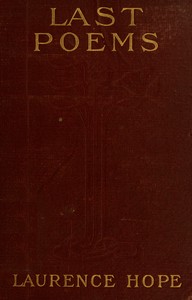
Last Poems: Translations from the Book of Indian Love
Written by Laurence Hope
Chaptra reads alongside you — AI insights, chapter breakdowns and reader discussions for every book. Join free
About this book
Reading guide
Themes, characters and key ideas in Last Poems: Translations from the Book of Indian Love, written by Chaptra AI.
- about 8 hours
- intermediate
- romantic
- melancholic
- passionate
Laurence Hope's "Last Poems: Translations from the Book of Indian Love" is a poignant collection of lyrical poetry from the early 20th century, exploring the multifaceted nature of romantic love, longing, and heartache. Penned from a distinctly feminine perspective, the verses delve into the emotional and psychological landscapes of desire, loss, and memory, set against the evocative backdrop of India. Through figures like Yasmini and unnamed lovers, the collection captures the bittersweet tension between fleeting joy and enduring sorrow. It offers an immersive experience into the complexities of love, marked by vivid natural imagery and a deep sense of yearning that resonates universally.
“I cannot provide specific quotes without access to the actual text of the book. However, based on the description, key quotes would likely be characterized by intense emotional expression, vivid natural metaphors (e.g., deserts, rivers, flowers), declarations of undying love or profound loss, and reflections on the bittersweet nature of memory and desire. They would often be deeply personal and evoke a strong sense of yearning or despair, often ending with a poignant, reflective note on love's enduring power or its cruel fragility.”
Key themes
- Love and Desire
- This is the central theme of the collection, explored in its myriad forms: passionate infatuation, tender affection, possessive love, and unrequited longing. The poems delve into the overwhelming nature of desire, depicting it as a force that can consume and define an individual. Love is presented as both a source of immense joy and profound vulnerability, often leading to intense emotional experiences.
- Longing and Separation
- A pervasive theme throughout the collection, longing is often the dominant emotional state. The poems frequently depict the pain of separation, whether physical or emotional, and the enduring ache for a lost or absent lover. This longing is not merely sadness but an active, consuming desire that colors the speaker's perception of the world and her own existence.
- Memory and Loss
- The collection frequently explores the bittersweet nature of memory, particularly in the context of lost love. Memories of past joys and shared moments serve to both comfort and torment the speaker, intensifying the sense of loss. The poems grapple with how to cherish what was, while enduring the pain of what is no longer, highlighting the indelible mark love leaves on the soul.
Worth discussing
How does the 'translation' conceit influence the reader's perception of the poems and their themes?
Chapter-by-chapter breakdowns, character arcs and the full thematic analysis come with a free account.
Discussions
No one has started one yet
Questions this book opens up
No discussions yet
Be the first to start a discussion about this book!
Sign up to start the discussionReviews
No reviews yet
Be the first to review this book!