
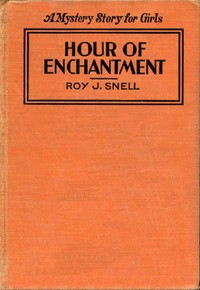
Hour of Enchantment: A Mystery Story for Girls
Written by Roy J. (Roy Judson) Snell
Chaptra reads alongside you — AI insights, chapter breakdowns and reader discussions for every book. Join free
About this book
Reading guide
Themes, characters and key ideas in Hour of Enchantment: A Mystery Story for Girls, written by Chaptra AI.
- about 8 hours
- intermediate
- mysterious
- adventurous
- enchanting
Roy J. Snell's "Hour of Enchantment" transports readers to a vibrant early 20th-century Chicago carnival, where young Florence Huyler's fascination with a mysterious three-bladed knife and an enigmatic 'long-eared Chinaman' ignites a thrilling adventure. Joined by her loyal friend Petite Jeanne, Florence embarks on a quest to unravel the secrets behind the jeweled artifact and its owner, leading them through a captivating world of intrigue and discovery. The narrative weaves together themes of friendship, courage, and the pursuit of lost treasures, set against a backdrop of suspense and enchantment. It's a classic 'mystery for girls' that combines a spirited protagonist with an unfolding enigma, capturing the imagination of its intended audience.
“"The carnival's magic seemed to hum around her, promising secrets just beyond the next tent."”
Key themes
- Adventure and Exploration
- The entire plot is driven by Florence's thirst for adventure and her innate curiosity, which leads her to explore beyond the mundane. The pursuit of the mysterious knife and the 'long-eared Chinaman' embodies a spirit of daring and discovery, encouraging readers to embrace the excitement of the unknown.
- Friendship and Loyalty
- The bond between Florence Huyler and Petite Jeanne is central to the narrative, showcasing how mutual support and loyalty are crucial in overcoming challenges. Their shared adventure strengthens their friendship, emphasizing the value of companionship in the face of the unknown.
- Prejudice and Stereotypes (Historical Context)
- Given the 'long-eared Chinaman' description and the early 20th-century publication, this theme is critically important. The book likely reflects prevalent societal prejudices and orientalist stereotypes of the era, potentially portraying the character in a caricatured or 'othered' manner. Analyzing this theme involves understanding how historical context shapes character representation and confronting outdated biases.
Worth discussing
How does the Chicago carnival setting contribute to the sense of mystery and enchantment in the story?
Chapter-by-chapter breakdowns, character arcs and the full thematic analysis come with a free account.
Discussions
No one has started one yet
Questions this book opens up
No discussions yet
Be the first to start a discussion about this book!
Sign up to start the discussionReviews
No reviews yet
Be the first to review this book!