
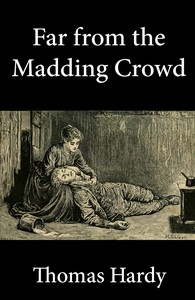
Far from the Madding Crowd
Written by Thomas Hardy
Chaptra reads alongside you — AI insights, chapter breakdowns and reader discussions for every book. Join free
About this book
Read it with a club
Chaptra's fiction clubs — small groups reading the same books and talking as they go.


CraxMe Readers Book Club
Fiction
- 385 members
- 227 discussions
- Started December 2025
Welcome to the Readers Book Club. This is an informal group for like-minded people, where you can discuss books, share and recommend, track your reading progress, and lots more. Discuss Books — all about books. Discuss a particular book or genre, share your favourite quotes. Book Reviews — loved a book and highly recommend it? Or was it just average? Share your review and discuss with fellow readers. (May contain spoilers.) Group Reads — what is a book club without a group read! Buddy Reads — planning to read a book and looking for someone to read it with? Post in the Buddy Read request thread, find a reading buddy, and start discussing.
Read Far from the Madding Crowd alongside people who are reading it too.
Also here: Doorstops, First Lines Club
Chaptra Prime — paid clubs, every club feature, and unlimited reading support, for $5 a month or $60 once.
See PrimeReading guide
Themes, characters and key ideas in Far from the Madding Crowd, written by Chaptra AI.
- about 10 hours
- intermediate
- romantic
- tragic
- pastoral
Far from the Madding Crowd is a quintessential Thomas Hardy novel set in rural Victorian Wessex, chronicling the tumultuous romantic life of the independent and spirited Bathsheba Everdene. Inheriting a farm, Bathsheba finds herself at the center of the affections of three very different men: the steadfast shepherd Gabriel Oak, the passionate and irresponsible Sergeant Frank Troy, and the wealthy, reserved farmer William Boldwood. The narrative explores themes of love, fate, social class, and the complex interplay between human desires and the unforgiving natural world. Ultimately, Bathsheba navigates a series of heartbreaks, misjudgments, and tragedies before finding stability and genuine affection.
“It is difficult for a woman to define her feelings in language which is chiefly made by men to express theirs.”
Key themes
- Love, Marriage, and Courtship
- The novel deeply explores various forms of love—steadfast, passionate, obsessive, unrequited—and the complexities of marriage in Victorian society. It contrasts impulsive passion with enduring affection, examining the societal pressures, personal desires, and profound consequences involved in choosing a life partner.
- Fate vs. Free Will / Coincidence
- Hardy frequently employs coincidence and circumstance to drive the plot, raising questions about whether characters control their destinies or are merely pawns of an indifferent universe. Misunderstandings, chance encounters, and unforeseen events often dictate the course of lives, suggesting a powerful, often cruel, hand of fate.
- Nature and the Rural Landscape
- The Wessex landscape is more than a setting; it is a vital, often indifferent, force that shapes the lives and fortunes of the characters. Hardy meticulously describes the beauty and harshness of rural life, emphasizing humanity's vulnerability to natural elements and the timeless rhythms of agricultural existence.
Worth discussing
Discuss Bathsheba's evolution as a character. To what extent does she achieve true independence or self-knowledge by the end of the novel?
Chapter-by-chapter breakdowns, character arcs and the full thematic analysis come with a free account.
Discussions
No one has started one yet
Questions this book opens up
No discussions yet
Be the first to start a discussion about this book!
Sign up to start the discussionReviews
No reviews yet
Be the first to review this book!