
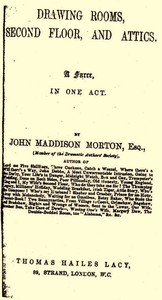
Drawing Rooms, Second Floor, and Attics: A Farce, in One Act
Written by John Maddison Morton
Chaptra reads alongside you — AI insights, chapter breakdowns and reader discussions for every book. Join free
About this book
Reading guide
Themes, characters and key ideas in Drawing Rooms, Second Floor, and Attics: A Farce, in One Act, written by Chaptra AI.
- about 1 hours
- beginner
- humorous
- lighthearted
- chaotic
John Maddison Morton's "Drawing Rooms, Second Floor, and Attics" is a lively mid-19th century Victorian farce in one act, brimming with comedic misunderstandings and frantic mistaken identities. The play centers on Triptolemus Brown, a young chemist new to London, who quickly finds himself embroiled in absurd predicaments involving his uncle, prospective brides, and a menacing sailor. His attempts to evade detection, which include cross-dressing, culminate in a chaotic ball where he must simultaneously impress his beloved Phoebe Furbelow and escape disgruntled relatives. Through witty dialogue and slapstick, the play masterfully captures the essence of light-hearted entertainment, reflecting the period's theatrical style designed to amuse audiences with its humorous complexities.
“Good heavens! Is that a menacing sailor, or merely my digestion playing tricks upon a nervous constitution?”
Key themes
- Mistaken Identity
- The central engine of the farce, driving nearly all of Triptolemus's predicaments as he is either mistaken for others or attempts to disguise himself to escape detection. This theme generates the primary comedic situations and plot complications, highlighting the humorous potential of misperception.
- Social Conventions & Absurdity
- The play subtly satirizes the rigid social expectations, decorum, and pretenses of Victorian society by placing characters in utterly absurd and undignified situations. The humor arises from the clash between societal norms and the chaotic reality of human behavior, revealing the comedic potential in attempts to maintain composure amidst pandemonium.
- Romantic Pursuit & Obstacles
- The underlying motivation for much of Triptolemus's frantic actions and predicaments is his desire to win the affection of Phoebe Furbelow. The play explores the comical lengths to which individuals will go for love, navigating numerous external obstacles, rivals, and self-imposed challenges in the process.
Worth discussing
How does the play use mistaken identity to generate humor, and what does this reveal about Victorian society's emphasis on appearances?
Chapter-by-chapter breakdowns, character arcs and the full thematic analysis come with a free account.
Discussions
No one has started one yet
Questions this book opens up
No discussions yet
Be the first to start a discussion about this book!
Sign up to start the discussionReviews
No reviews yet
Be the first to review this book!