
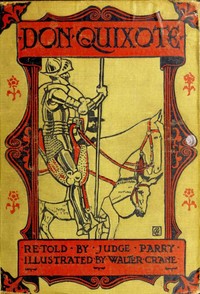
Don Quixote of the Mancha, Retold by Judge Parry
Written by Miguel de Cervantes Saavedra,Edward Abbott Parry
Chaptra reads alongside you — AI insights, chapter breakdowns and reader discussions for every book. Join free
About this book
Reading guide
Themes, characters and key ideas in Don Quixote of the Mancha, Retold by Judge Parry, written by Chaptra AI.
- about 10 hours
- intermediate
- humorous
- adventurous
- philosophical
Judge Parry's retelling of "Don Quixote of the Mancha" introduces readers to the titular gentleman, so immersed in tales of chivalry that he renames himself and embarks on a quest as a knight-errant. Accompanied by his pragmatic squire, Sancho Panza, Don Quixote's journey is a series of comical misadventures where his noble delusions clash with mundane reality, transforming inns into castles and windmills into giants. This adaptation aims to simplify Cervantes' classic narrative for younger audiences, preserving its inherent humor, profound wisdom, and the enduring exploration of idealism versus realism. Through their travels, the duo becomes a timeless symbol of the human spirit's capacity for imagination and the steadfastness of loyalty.
“I know who I am, and I know that I am capable of being not only the characters I have named, but all the Knights of the Round Table put together.”
Key themes
- Idealism vs. Realism
- This theme is central to the novel, explored through the contrasting perspectives of Don Quixote (boundless idealism) and Sancho Panza (down-to-earth realism). It questions the value of dreams and aspirations against the harsh realities of life.
- The Power of Imagination and Illusion
- The novel profoundly explores how imagination can shape and even override reality. Don Quixote's entire quest is built upon his ability to transform the mundane world into the fantastical realm of chivalric romance, creating his own truth.
- Madness and Sanity
- The novel constantly questions the boundaries between madness and sanity. Don Quixote's 'madness' is often portrayed sympathetically, even nobly, leading readers to ponder whether his commitment to ideals, however delusional, is more 'sane' than the apathy of the 'rational' world.
Worth discussing
How does Don Quixote's idealism clash with Sancho Panza's realism, and what does this dynamic reveal about human nature?
Chapter-by-chapter breakdowns, character arcs and the full thematic analysis come with a free account.
Discussions
No one has started one yet
Questions this book opens up
No discussions yet
Be the first to start a discussion about this book!
Sign up to start the discussionReviews
No reviews yet
Be the first to review this book!