
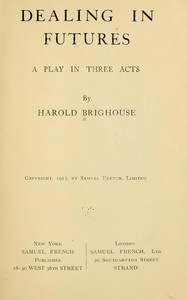
Dealing in Futures: A Play in Three Acts
Written by Harold Brighouse
Chaptra reads alongside you — AI insights, chapter breakdowns and reader discussions for every book. Join free
About this book
Reading guide
Themes, characters and key ideas in Dealing in Futures: A Play in Three Acts, written by Chaptra AI.
- about 8 hours
- intermediate
- Dramatic
- Socially conscious
- Tense
Harold Brighouse's "Dealing in Futures" is an early 20th-century three-act play set in a Lancashire village, exploring the intricate conflicts within the Thompson family. It centers on Jabez Thompson, a successful chemical manufacturer, and his daughter Rosie, whose engagement to the idealistic chemist Charlie Bunting sparks a generational and ideological clash. The play delves into the fundamental tension between business profit and social responsibility, particularly concerning worker welfare. Through its initial tense dinner scene and the introduction of Dr. Clavering, the narrative establishes a foundation for examining personal desires against societal pressures, labor relations, and the complexities of family and romantic ties.
“No specific quotes are provided in the source material for this analysis.”
Key themes
- Social Responsibility vs. Profit-Making
- This is the central conflict of the play, embodied by Jabez Thompson's focus on business acumen and Charlie Bunting's dedication to worker welfare. It explores the ethical dilemmas faced by industrialists in an era of growing social consciousness.
- Family Relationships and Generational Conflict
- The play explores the dynamics within the Thompson family, particularly the strained relationship between Jabez and Rosie, exacerbated by Rosie's engagement. It highlights the clash between traditional parental expectations and the evolving values of the younger generation.
- Idealism vs. Pragmatism
- This theme pits Charlie Bunting's idealistic vision for worker welfare against Jabez Thompson's pragmatic, profit-oriented approach to business. It examines the challenges of upholding one's ideals in the face of economic realities and societal pressures.
Worth discussing
How does the play portray the conflict between profit-making and social responsibility, and which side does it seem to favor?
Chapter-by-chapter breakdowns, character arcs and the full thematic analysis come with a free account.
Discussions
No one has started one yet
Questions this book opens up
No discussions yet
Be the first to start a discussion about this book!
Sign up to start the discussionReviews
No reviews yet
Be the first to review this book!