
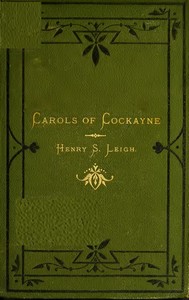
Carols of Cockayne: The Third Edition, 1874
Written by Henry S. (Henry Sambrooke) Leigh
Chaptra reads alongside you — AI insights, chapter breakdowns and reader discussions for every book. Join free
About this book
Read it with a club
Chaptra's poetry and plays clubs — small groups reading the same books and talking as they go.


Shakespeare Out Loud
Poetry and plays
- 4 members
- 4 discussions
- Active 2d ago
Plays are scripts, not novels. We read them aloud, in parts, and it changes everything. This is a Chaptra house club — set up and moderated by us to get the conversation going. Open to everyone; jump in anywhere.
Read Carols of Cockayne: The Third Edition, 1874 alongside people who are reading it too.
Chaptra Prime — paid clubs, every club feature, and unlimited reading support, for $5 a month or $60 once.
See PrimeReading guide
Themes, characters and key ideas in Carols of Cockayne: The Third Edition, 1874, written by Chaptra AI.
- about 8 hours
- intermediate
- Humorous
- Whimsical
- Lighthearted
Henry S. Leigh's "Carols of Cockayne" is a delightful 1874 collection of light verse, offering a witty and whimsical reflection on late 19th-century life. Comprising poems previously published in periodicals, the anthology was crafted for a drawing-room audience, aiming to entertain and amuse with its playful tone. Through clever observations, relatable anecdotes, and gentle satire, Leigh explores social themes, the intricacies of love and identity, and the nature of artistic ambition. The work stands as a charming example of Victorian light poetry, inviting readers into a world of humor and thoughtful amusement.
“In Cockayne's realm, where fancy takes its flight, We weave our rhymes, both whimsical and light.”
Key themes
- Humor and Satire
- Central to the collection, humor and satire are used to entertain and to offer commentary on human foibles and societal norms. Leigh employs wordplay, irony, and comical situations to evoke laughter, often with a gentle, rather than biting, critical edge. This theme permeates nearly every poem, making the collection a prime example of light verse's capacity for amusement and subtle critique.
- Social Observation & Victorian Life
- Leigh's poems provide a window into the social conventions, values, and everyday concerns of late 19th-century Britain. The collection subtly chronicles the mores of the drawing-room audience it was intended for, reflecting on domestic life, leisure activities, and the unspoken rules governing interactions. It offers a fascinating glimpse into the cultural landscape of the period.
- Love and Relationships
- A recurring theme, love and relationships are often explored with a lighthearted and sometimes comical touch. The poems touch upon the pursuit of love, romantic misunderstandings, and the various emotional entanglements that define human connection. Leigh often uses humor to highlight the universal challenges and joys associated with forming romantic bonds.
Worth discussing
How does Leigh's 'light verse' compare to more serious poetry of the Victorian era, and what was its cultural role?
Chapter-by-chapter breakdowns, character arcs and the full thematic analysis come with a free account.
Discussions
No one has started one yet
Questions this book opens up
No discussions yet
Be the first to start a discussion about this book!
Sign up to start the discussionReviews
No reviews yet
Be the first to review this book!