
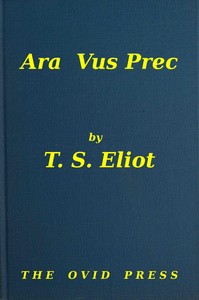
Ara vus prec
Written by T. S. (Thomas Stearns) Eliot
Chaptra reads alongside you — AI insights, chapter breakdowns and reader discussions for every book. Join free
About this book
Reading guide
Themes, characters and key ideas in Ara vus prec, written by Chaptra AI.
- about 8 hours
- advanced
- melancholic
- introspective
- fragmented
T. S. Eliot's "Ara vus prec" is a seminal collection of early 20th-century modernist poetry that profoundly explores themes of alienation, the decay of Western civilization, and the complexities of human consciousness. Through a tapestry of fragmented narratives and dramatic monologues, Eliot captures the spiritual barrenness and intellectual disillusionment of an era grappling with rapid societal change and the aftermath of war. The poems, rich with classical and literary allusions, vividly depict characters struggling with identity, desire, and a pervasive sense of futility in a world stripped of traditional meaning. It stands as a cornerstone of modernist literature, influencing countless poets and shaping the landscape of 20th-century thought.
“Let us go then, you and I, / When the evening is spread out against the sky / Like a patient etherized upon a table.”
Key themes
- Alienation and Isolation
- This theme is central to the collection, exploring the profound sense of detachment experienced by individuals in modern society. Characters are often isolated from others, from meaningful action, and even from their own desires, leading to paralysis and an inability to connect.
- Spiritual Decay and Loss of Meaning
- Eliot frequently laments the decline of traditional faith and the resulting spiritual emptiness in the modern world. This theme explores the consequences of a society that has lost its guiding beliefs, leading to a sense of purposelessness and moral ambiguity.
- Identity and Self-Doubt
- Many of Eliot's characters are profoundly uncertain about their own identities, their roles in society, and their ability to assert themselves. This self-doubt leads to paralysis, missed opportunities, and a pervasive sense of inadequacy.
Worth discussing
How does Eliot use fragmentation and allusion to convey the themes of alienation and spiritual decay in the collection?
Chapter-by-chapter breakdowns, character arcs and the full thematic analysis come with a free account.
Discussions
No one has started one yet
Questions this book opens up
No discussions yet
Be the first to start a discussion about this book!
Sign up to start the discussionReviews
No reviews yet
Be the first to review this book!