
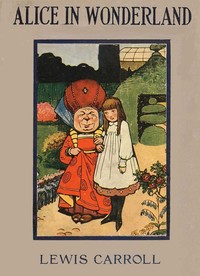
Alice's Adventures in Wonderland
Written by Lewis Carroll
Chaptra reads alongside you — AI insights, chapter breakdowns and reader discussions for every book. Join free
About this book
Read it with a club
Chaptra's science fiction and fantasy clubs — small groups reading the same books and talking as they go.


Sci-Fi That Got It Right (And Wrong)
Science fiction and fantasy
- 4 members
- 4 discussions
- Active Sep 11
Old science fiction, read against what actually happened. We keep score. This is a Chaptra house club — set up and moderated by us to get the conversation going. Open to everyone; jump in anywhere.
Read Alice's Adventures in Wonderland alongside people who are reading it too.
Also here: The Dragon Problem, Hard SF vs Soft SF
Chaptra Prime — paid clubs, every club feature, and unlimited reading support, for $5 a month or $60 once.
See PrimeReading guide
Themes, characters and key ideas in Alice's Adventures in Wonderland, written by Chaptra AI.
- about 8 hours
- intermediate
- whimsical
- nonsensical
- mysterious
Lewis Carroll's "Alice's Adventures in Wonderland" is a seminal work of children's literature, following a young girl named Alice who tumbles down a rabbit hole into a fantastical, nonsensical world. Bored with her mundane reality, Alice embarks on a series of bizarre encounters with an array of anthropomorphic creatures and absurd situations, constantly grappling with changes in her own size and the illogical rules of Wonderland. The narrative explores themes of identity, logic versus nonsense, and the transition from childhood innocence to a bewildering, adult-like reality. Ultimately, Alice awakens from her dream, leaving readers to ponder the nature of imagination, reality, and the arbitrary constructs of the world.
“"Curiouser and curiouser!" cried Alice (she was so much surprised, that for the moment she quite forgot how to speak good English).”
Key themes
- Identity and Self-Discovery
- Alice's constant changes in size and the questioning of her identity by Wonderland inhabitants ('Who are YOU?') force her to grapple with who she is. This theme explores the fluidity of self, the search for personal definition, and the anxiety of losing one's sense of self in a bewildering world, mirroring the developmental challenges of childhood and adolescence.
- Logic vs. Nonsense
- This central theme highlights the clash between Alice's rational, ordered Victorian mindset and the utterly illogical, nonsensical rules and conversations of Wonderland. It explores the limits of human reason, the arbitrary nature of language and social conventions, and the beauty or frustration found in the absurd.
- Childhood and Imagination
- The book celebrates the boundless imagination of childhood, portraying Wonderland as a manifestation of a child's dreamscape where logic is suspended and fantasy reigns. It also subtly explores the transition from the innocence of childhood to the bewildering complexities of the adult world, as Alice struggles to make sense of, and assert herself within, a world that seems to operate on adult-like, yet nonsensical, rules.
Worth discussing
How does Alice's perception of reality change throughout her adventures in Wonderland? Does she truly adapt, or does she remain an outsider?
Chapter-by-chapter breakdowns, character arcs and the full thematic analysis come with a free account.
Discussions
No one has started one yet
Questions this book opens up
No discussions yet
Be the first to start a discussion about this book!
Sign up to start the discussionReviews
No reviews yet
Be the first to review this book!