
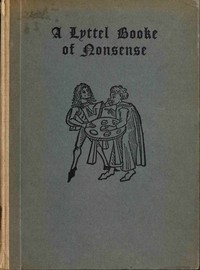
A lyttel booke of nonsense
Written by Randall Davies
Chaptra reads alongside you — AI insights, chapter breakdowns and reader discussions for every book. Join free
About this book
Reading guide
Themes, characters and key ideas in A lyttel booke of nonsense, written by Chaptra AI.
- about 1 hours
- beginner
- humorous
- whimsical
- lighthearted
Randall Davies's "A Lyttel Booke of Nonsense" is a charming early 20th-century collection of humorous verses and limericks, embodying the playful spirit of its era and aligning with traditions of English children's literature and light poetry. The book consists of self-contained, whimsical rhymes that showcase the author's talent for entertaining wordplay. Each poem introduces an eccentric character or amusing scenario, from a fearful young fellow to an old man vexed by suitors, inviting readers to delight in the lighter aspects of life and the inherent joy of language. Ultimately, it serves as a delightful testament to the enduring appeal and whimsical nature of nonsense poetry.
“Specific quotes are not provided in the summary, but typical 'key quotes' would be the memorable, often humorous, final lines of individual limericks, encapsulating the witty twist or absurd resolution of each verse.”
Key themes
- The Joy of Language and Wordplay
- Central to nonsense poetry, this theme highlights the inherent pleasure derived from manipulating language, rhyme, and rhythm. Davies expertly uses the limerick form to showcase linguistic dexterity, demonstrating how clever rhyming, alliteration, and unexpected word choices can create both humor and aesthetic pleasure. The book is a testament to the power of words to entertain and enchant, rather than merely convey information.
- The Whimsy of the Absurd
- This theme explores the delight found in situations and ideas that defy logic or common sense. Davies's limericks thrive on creating scenarios that are inherently nonsensical but presented with a straightforward, matter-of-fact tone, inviting readers to embrace the joy of the illogical. It's not about deep philosophical inquiry into absurdity, but rather a playful celebration of it.
- Gentle Social Observation and Satire
- While primarily humorous, the limericks often offer subtle observations on human eccentricities, social anxieties, and everyday predicaments. The 'young fellow' with his fear or the 'old fellow' dealing with suitors are archetypes that, while exaggerated, touch upon relatable aspects of human behavior and social interactions. The satire is never harsh but rather a lighthearted nudge, inviting readers to laugh at themselves and the quirks of those around them.
Worth discussing
What defines 'nonsense poetry,' and how does Davies's work fit into this definition?
Chapter-by-chapter breakdowns, character arcs and the full thematic analysis come with a free account.
Discussions
No one has started one yet
Questions this book opens up
No discussions yet
Be the first to start a discussion about this book!
Sign up to start the discussionReviews
No reviews yet
Be the first to review this book!