
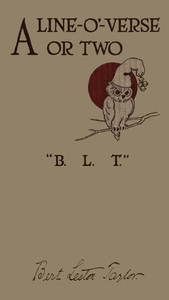
A line-o'-verse or two
Written by Bert Leston Taylor
Chaptra reads alongside you — AI insights, chapter breakdowns and reader discussions for every book. Join free
About this book
Reading guide
Themes, characters and key ideas in A line-o'-verse or two, written by Chaptra AI.
- about 5 hours
- intermediate
- humorous
- whimsical
- satirical
A Line-o'-Verse or Two" by Bert Leston Taylor is a delightful early 20th-century collection of humorous poems, characterized by its satirical and whimsical tone. Taylor expertly captures the absurdities of everyday life, social nuances, and human foibles through clever wordplay and rhythmic verse. The compilation explores themes ranging from individual struggles with self-discipline, as seen in "The Lay of St. Ambrose," to lighthearted takes on societal figures like "Gentle Doctor Brown." Ultimately, it serves as a charming reflection on humanity's quirks, inviting readers to revel in the wit embedded in ordinary moments, while offering a subtle window into the cultural landscape of its era.
“The monk, he sighed, 'Oh, blessed grace, / To keep desire from this poor place!'”
Key themes
- The Absurdity of Modern Life
- Taylor's poems frequently highlight the humorous contradictions, irrationalities, and minor frustrations inherent in daily existence and the burgeoning modern world of the early 20th century. He finds comedy in mundane situations, social conventions, and technological changes, often gently mocking human reactions to them, reflecting a world grappling with new complexities.
- Satire and Social Commentary
- Taylor uses humor as a vehicle for light social commentary, gently critiquing various aspects of society, professions, and human behavior. His satire is typically good-natured, aiming to provoke smiles and thoughtful recognition rather than harsh condemnation. He targets exaggerated professionalism (e.g., Doctor Brown), pretension, and the quaint conventions of his era.
- Human Foibles and Relationships
- Many poems explore universal aspects of human nature, such as vanity, ambition, minor hypocrisies, and the complexities of interpersonal interactions. Taylor observes these traits with a keen, yet often forgiving, eye, inviting readers to recognize themselves and others in his verses. This includes internal struggles like St. Ambrose's as well as external social dynamics.
Worth discussing
How does Taylor use humor and satire to comment on the social norms and absurdities of his time? Are these observations still relevant today?
Chapter-by-chapter breakdowns, character arcs and the full thematic analysis come with a free account.
Discussions
No one has started one yet
Questions this book opens up
No discussions yet
Be the first to start a discussion about this book!
Sign up to start the discussionReviews
No reviews yet
Be the first to review this book!