
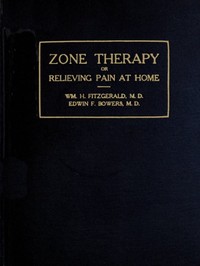
Zone therapy; or, Relieving pain at home
Written by Wm. H. (William Henry Hope) Fitzgerald,Edwin F. (Edwin Frederick) Bowers
Chaptra reads alongside you — AI insights, chapter breakdowns and reader discussions for every book. Join free
About this book
Reading guide
Themes, characters and key ideas in Zone therapy; or, Relieving pain at home, written by Chaptra AI.
- about 6 hours
- intermediate
- Instructive
- Empowering
- Informative
"Zone therapy; or, Relieving pain at home" by Wm. H. Fitzgerald and Edwin F. Bowers, published in 1917, introduces the concept of 'zone therapy,' a precursor to modern reflexology. The book posits that the body is divided into ten longitudinal zones, and applying pressure to specific points within these zones—particularly on the hands and feet—can alleviate pain and treat various ailments in corresponding body parts. It advocates for a self-treatment approach, empowering individuals to manage their own health concerns without invasive procedures. The text combines theoretical explanations with practical instructions and anecdotal evidence, aiming to popularize this non-conventional healing method for home use.
“The body is divided into ten zones, or longitudinal sections, five on each side of the median line.”
Key themes
- Alternative Medicine and Scientific Validity
- The book is a foundational text for an alternative therapy, presenting a system of healing that operates outside the then-established medical orthodoxy. It raises perennial questions about what constitutes 'proof' in medicine, relying heavily on anecdotal evidence and theoretical constructs rather than empirical, controlled studies, which marks a significant tension with the scientific method.
- Self-Healing and Empowerment
- The book champions the idea that individuals can effectively manage their own pain and various ailments through simple, non-invasive methods, thereby fostering a sense of personal agency over one's health. It positions zone therapy as an accessible tool for home use, reducing reliance on professional medical intervention for everyday complaints.
- The Body's Innate Capabilities and Natural Healing
- Underlying zone therapy is the belief that the human body possesses inherent mechanisms for healing and pain relief, which can be activated or stimulated through external means (pressure). This taps into a broader philosophical idea that the body is designed to maintain health and can repair itself if given the right impetus, minimizing the need for external chemical or surgical interventions.
Worth discussing
How does 'Zone therapy' reflect the state of medical knowledge and public health concerns in the early 20th century?
Chapter-by-chapter breakdowns, character arcs and the full thematic analysis come with a free account.
Discussions
No one has started one yet
Questions this book opens up
No discussions yet
Be the first to start a discussion about this book!
Sign up to start the discussionReviews
No reviews yet
Be the first to review this book!