
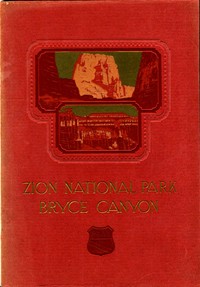
Zion National Park, Bryce Canyon, Cedar Breaks, Kaibab Forest, North Rim of Grand Canyon
Written by Union Pacific Railroad Company
Chaptra reads alongside you — AI insights, chapter breakdowns and reader discussions for every book. Join free
About this book
Reading guide
Themes, characters and key ideas in Zion National Park, Bryce Canyon, Cedar Breaks, Kaibab Forest, North Rim of Grand Canyon, written by Chaptra AI.
- about 8 hours
- intermediate
- awe-inspiring
- informative
- adventurous
Published in the 1920s by the Union Pacific Railroad Company, this travel guide, "Zion National Park, Bryce Canyon, Cedar Breaks, Kaibab Forest, North Rim of Grand Canyon," serves as a vivid invitation to explore some of America's most spectacular natural wonders. Authored by W. H. Murray, the book meticulously details the unique geological formations, breathtaking vistas, and historical contexts of these national parks and forests. Beyond offering practical travel information on routes and accommodations, it aims to inspire awe and appreciation for the natural beauty of the American Southwest. The guide promotes a blend of adventure and serenity, encouraging readers to embark on a journey of discovery and connect with the monumental landscapes. It stands as both a practical resource for early 20th-century tourists and a significant document reflecting the nascent era of national park tourism.
“Here, in Zion, the very rocks tell tales of eons, carved into cathedrals and castles by the patient hand of time, painted with a palette no artist could ever fully replicate.”
Key themes
- The Grandeur and Majesty of Nature
- This is the foundational theme, emphasizing the awe-inspiring scale, unique geological formations, and profound beauty of the national parks. The book consistently highlights nature as a source of wonder, spiritual upliftment, and a testament to Earth's ancient processes, encouraging a sense of reverence in the visitor.
- Adventure and Exploration
- The guide actively promotes and frames the act of visiting these parks as an adventure, an opportunity for discovery and active engagement with the wilderness. It encourages readers to step out of their everyday lives and embrace the thrill of exploring new, breathtaking environments, albeit within the confines of established routes and amenities.
- The American Frontier and Western Expansion (Historical Context)
- The book interweaves historical accounts of early settlers, pioneers, and Indigenous peoples, implicitly connecting the present-day tourist experience to a narrative of 'taming' and 'discovering' the American West. It reflects the early 20th-century perspective on this history, often romanticizing the pioneer spirit and framing the land as newly accessible, while potentially simplifying or overlooking the complexities of Indigenous history and land claims.
Worth discussing
How did early 20th-century travel guides like Murray's shape public perception and appreciation of national parks?
Chapter-by-chapter breakdowns, character arcs and the full thematic analysis come with a free account.
Discussions
No one has started one yet
Questions this book opens up
No discussions yet
Be the first to start a discussion about this book!
Sign up to start the discussionReviews
No reviews yet
Be the first to review this book!