
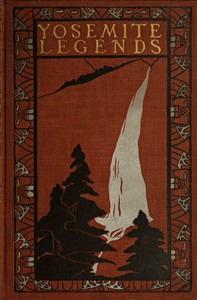
Yosemite Legends
Written by Bertha H. Smith
Chaptra reads alongside you — AI insights, chapter breakdowns and reader discussions for every book. Join free
About this book
Reading guide
Themes, characters and key ideas in Yosemite Legends, written by Chaptra AI.
- about 5 hours
- intermediate
- mythical
- reverent
- ancient
Bertha H. Smith's "Yosemite Legends" is a foundational collection that gathers and retells the rich oral traditions and myths of the Native American tribes, primarily the Ahwahneechee (Miwok/Paiute), who historically inhabited the Yosemite Valley. Through a series of distinct narratives, the book explains the origins of Yosemite's iconic natural features—such as El Capitan, Half Dome, and Yosemite Falls—imbuing the landscape with spiritual significance and ancient wisdom. It serves as an important cultural document, preserving indigenous perspectives on creation, morality, and the deep connection between people and the land. The work invites readers to see Yosemite not just as a geological marvel, but as a living tapestry woven with ancestral stories.
“Before the coming of the white man, the Yosemite Valley was known as Ahwahnee, 'Deep Grassy Valley,' and its spirit was woven into every rock and stream.”
Key themes
- The Interconnectedness of Nature and Humanity
- This theme is central to the entire collection. The legends consistently portray the natural world not as a separate entity, but as intrinsically linked to human experience, emotion, and history. Mountains, rivers, and waterfalls are personified, bearing the marks of ancient deeds and embodying ancestral spirits. Humanity's actions, both good and bad, directly impact the landscape and its spirits, suggesting a symbiotic relationship where respect for nature is paramount.
- Origins and Creation (Etiology)
- Many legends serve as etiological myths, explaining the origins of Yosemite's distinctive geological features, flora, and fauna, as well as natural phenomena like floods or seasons. These stories provide a cultural and spiritual framework for understanding the world, offering explanations for complex natural processes through narrative rather than scientific inquiry. They reflect a deep curiosity about the world and a desire to connect humanity's existence to its foundational moments.
- Moral and Ethical Guidance
- Embedded within many of the legends are clear moral lessons and ethical guidelines for living in harmony with nature and community. Characters often face consequences for greed, disrespect, or hubris, while humility, bravery, and cooperation are rewarded. These stories function as didactic tools, passing down cultural values and reinforcing appropriate behavior within the tribal structure and in relation to the environment.
Worth discussing
How do these legends transform the reader's perception of Yosemite Valley compared to a purely geological or historical account?
Chapter-by-chapter breakdowns, character arcs and the full thematic analysis come with a free account.
Discussions
No one has started one yet
Questions this book opens up
No discussions yet
Be the first to start a discussion about this book!
Sign up to start the discussionReviews
No reviews yet
Be the first to review this book!