
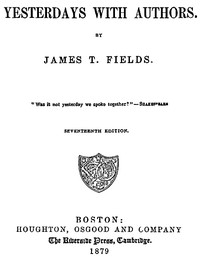
Yesterdays with Authors
Written by James Thomas Fields
Chaptra reads alongside you — AI insights, chapter breakdowns and reader discussions for every book. Join free
About this book
Reading guide
Themes, characters and key ideas in Yesterdays with Authors, written by Chaptra AI.
- about 8 hours
- intermediate
- reflective
- nostalgic
- insightful
James T. Fields' "Yesterdays with Authors" is an intimate collection of personal anecdotes and reflections from a prominent 19th-century publisher and bookseller. The memoir offers a unique window into the lives and creative processes of literary giants such as Nathaniel Hawthorne, Charles Dickens, and William Makepeace Thackeray, with whom Fields cultivated close friendships. Through a warm, conversational style, Fields shares his privileged observations, blending biographical narrative with a vivid portrayal of the literary world during his era. The book sets a nostalgic tone from the outset, reminiscing about the joy of literary companionship and the profound impact these authors had on him, inviting readers into a realm where personal history and literary legacy intertwine. It serves as both a historical document and a heartfelt tribute to the figures who shaped the literary canon.
“"To have known and loved the men and women who have left us their imperishable thoughts in books, is to have lived a double life, rich in the experience of both worlds."”
Key themes
- Literary Friendship and Mentorship
- The memoir's core theme revolves around the profound and enriching friendships Fields cultivated with the leading literary figures of his era. It explores the dynamics of these relationships, characterized by mutual respect, intellectual exchange, and personal affection. Fields often frames his interactions as a form of mentorship, where he, as a publisher, facilitates the authors' work, and they, in turn, offer him invaluable insights into the creative process and the human condition. The book celebrates the camaraderie and shared passion that bound these individuals together.
- The Creative Process and Genius
- Fields offers a unique, first-hand look into the minds and working habits of literary geniuses. He delves into their inspirations, their methods of composition, their struggles with writer's block, and their dedication to their craft. The book explores the mysterious nature of creativity, suggesting that genius is a blend of innate talent, rigorous discipline, and profound observation of the human experience. Fields' anecdotes provide concrete examples of how these authors approached their art.
- The Publisher's Role and Literary Marketplace
- As a publisher, Fields provides an invaluable perspective on the commercial and logistical aspects of bringing literature to the public. The memoir implicitly details the symbiotic relationship between authors and publishers, highlighting the publisher's role not just as a financier but also as an editor, promoter, and confidant. It sheds light on the business of bookselling, the challenges of copyright, and the evolution of the literary marketplace in the 19th century.
Worth discussing
How does Fields' unique position as a publisher and friend shape his portrayal of the authors he discusses?
Chapter-by-chapter breakdowns, character arcs and the full thematic analysis come with a free account.
Discussions
No one has started one yet
Questions this book opens up
No discussions yet
Be the first to start a discussion about this book!
Sign up to start the discussionReviews
No reviews yet
Be the first to review this book!