
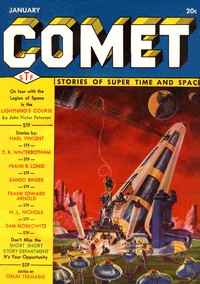
Yesterday's Revenge
Written by H. L. Nichols
Chaptra reads alongside you — AI insights, chapter breakdowns and reader discussions for every book. Join free
About this book
Reading guide
Themes, characters and key ideas in Yesterday's Revenge, written by Chaptra AI.
- about 8 hours
- intermediate
- dark
- dystopian
- gripping
H. L. Nichols' early 20th-century science fiction novel, "Yesterday's Revenge," plunges readers into a dystopian future ruled by a tyrannical Master who wields advanced technology and robots to maintain absolute control over a world scarred by past wars. The narrative centers on the Master's obsessive desire to pull a girl from 1940 into his present using a 'Time Visor' invented by Technician Heidkamp. Driven by a deep personal vendetta against the Master, Heidkamp cunningly manipulates the very technology of oppression to trap his tormentor, orchestrating his downfall. This gripping tale explores the profound conflict between freedom and tyranny, highlighting the destructive consequences of unchecked ambition and the enduring human spirit of resistance, culminating in the promise of a revolutionary new beginning.
“"This future is mine to command, and the past, a mere plaything for my desires."”
Key themes
- Power and Control
- This theme is central, explored through the Master's absolute rule, his use of advanced technology (robots, Time Visor) for surveillance and enforcement, and his desire to control not just the present but also the past. It examines the corrupting nature of unchecked power and the mechanisms by which a tyrant maintains dominion.
- Consequences of Obsessive Ambition
- This theme focuses on the Master's insatiable desire for power and his ultimate downfall. His ambition extends beyond ruling the present to possessing the past, leading to a fatal flaw that Heidkamp exploits. It illustrates how unchecked personal desires can lead to self-destruction.
- Oppression vs. Freedom
- This is a core dystopian theme, contrasting the suffocating tyranny of the Master's regime with the innate human desire for liberation. It is embodied by the suffering of the populace and the eventual rise of the revolutionary society, sparked by Heidkamp's actions.
Worth discussing
How does 'Yesterday's Revenge' use the concept of time travel to explore themes of power and control, beyond mere physical domination?
Chapter-by-chapter breakdowns, character arcs and the full thematic analysis come with a free account.
Discussions
No one has started one yet
Questions this book opens up
No discussions yet
Be the first to start a discussion about this book!
Sign up to start the discussionReviews
No reviews yet
Be the first to review this book!