
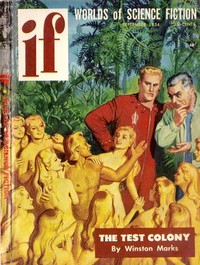
World Without War
Written by E. G. Von Wald
Chaptra reads alongside you — AI insights, chapter breakdowns and reader discussions for every book. Join free
About this book
Reading guide
Themes, characters and key ideas in World Without War, written by Chaptra AI.
- about 10 hours
- advanced
- philosophical
- dystopian
- thought-provoking
E. G. Von Wald's 'World Without War' plunges into a future where global conflict has been eradicated, not through enlightenment, but through the pervasive and morally ambiguous 'Pax Universalis' enforced by the Concordium. The narrative follows Dr. Elara Vance, a brilliant neuroscientist, who uncovers the dark truth behind this enforced tranquility: a systemic suppression of human emotion and free will. As Elara grapples with the ethical implications, she must choose between maintaining a fragile, manufactured peace and risking a return to chaos for the sake of authentic human experience. The book provocatively explores the ultimate cost of peace when achieved through the sacrifice of fundamental human liberties.
“Peace, Elara, is not merely the absence of war, but the absence of the *capacity* for it.”
Key themes
- The Cost of Peace
- This theme explores the central question of the novel: what is humanity willing to sacrifice for a world without war? The book argues that the Pax Universalis, while eliminating conflict, comes at the cost of free will, authentic emotion, and individual identity. It forces readers to consider if such a peace is truly desirable or merely a gilded cage.
- Free Will vs. Security
- This theme directly contrasts the inherent human desire for autonomy and self-determination with the allure of absolute safety and stability. The Concordium offers perfect security from violence and chaos, but at the expense of individual choice and the full spectrum of human experience. The narrative questions whether true freedom can exist without the possibility of making 'wrong' or even destructive choices.
- Human Nature: Inherent or Conditioned?
- Von Wald delves into the age-old philosophical debate about whether humans are inherently violent and selfish, or if aggression is a learned behavior that can be eradicated. The Concordium operates on the premise that humanity's destructive tendencies can and must be engineered out, while the Dissidents argue that the capacity for aggression is inextricably linked to the capacity for passion, creativity, and profound love.
Worth discussing
Is peace at any cost truly peace? What boundaries should not be crossed in the pursuit of global harmony?
Chapter-by-chapter breakdowns, character arcs and the full thematic analysis come with a free account.
Discussions
No one has started one yet
Questions this book opens up
No discussions yet
Be the first to start a discussion about this book!
Sign up to start the discussionReviews
No reviews yet
Be the first to review this book!