
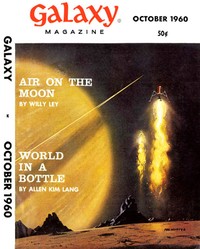
World in a Bottle
Written by Allen Kim Lang
Chaptra reads alongside you — AI insights, chapter breakdowns and reader discussions for every book. Join free
About this book
Reading guide
Themes, characters and key ideas in World in a Bottle, written by Chaptra AI.
- about 8 hours
- intermediate
- isolating
- longing
- scientific
Allen Kim Lang's "World in a Bottle" is an early 1960s science fiction novel that delves into the profound implications of human experimentation and the yearning for genuine connection. It follows John Bogardus, a 'Lapin' raised in a gnotobiotic, sterile environment, as he grapples with the paradox of his germ-free existence and his impossible love for an 'outsider' named Anne. The narrative intensifies with the tragic fate of Mary, another Lapin, whose marriage to a 'contaminated' man highlights the dire consequences of their condition. This catalyst propels John and his companions to seek ultimate freedom and the chance for true intimacy by embarking on a perilous journey into space aboard the "Orion Zeta", transforming a scientific premise into a deeply human quest for autonomy and love.
“"To be pure was to be alone. To be safe was to be untouched by life itself."”
Key themes
- Isolation vs. Connection
- The central theme explores the profound psychological and emotional toll of forced isolation. The Lapins' sterile environment, designed for scientific purity, paradoxically robs them of fundamental human connections and intimacy. The narrative highlights the inherent human need for touch, love, and interaction, contrasting it with the 'safety' of their germ-free existence.
- Ethics of Human Experimentation
- The novel directly confronts the moral boundaries of scientific research, particularly when it involves human subjects. The Lapins are essentially human guinea pigs, raised without their consent in an environment that severely limits their autonomy and potential for a 'normal' life. The theme questions whether the pursuit of scientific knowledge justifies such a profound sacrifice of individual rights and well-being.
- Love and Intimacy
- At its heart, the novel is a poignant exploration of the human capacity for love and the devastating impact of its denial. John's unrequited love for Anne and Mary's tragic pursuit of marital intimacy highlight how essential physical and emotional connection are to human well-being. The story posits that a life devoid of love, even if 'safe,' is fundamentally incomplete and ultimately unsustainable.
Worth discussing
What are the ethical implications of raising humans in a controlled, gnotobiotic environment for scientific study? Where should the line be drawn?
Chapter-by-chapter breakdowns, character arcs and the full thematic analysis come with a free account.
Discussions
No one has started one yet
Questions this book opens up
No discussions yet
Be the first to start a discussion about this book!
Sign up to start the discussionReviews
No reviews yet
Be the first to review this book!