
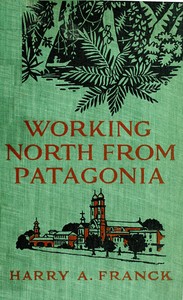
Working North from Patagonia: Being the Narrative of a Journey, Earned on the Way, Through Southern and Eastern South America
Written by Harry Alverson Franck
Chaptra reads alongside you — AI insights, chapter breakdowns and reader discussions for every book. Join free
About this book
Reading guide
Themes, characters and key ideas in Working North from Patagonia: Being the Narrative of a Journey, Earned on the Way, Through Southern and Eastern South America, written by Chaptra AI.
- about 8 hours
- intermediate
- adventurous
- observational
- informative
Harry Alverson Franck's "Working North from Patagonia" is an early 20th-century travel narrative chronicling the author's extensive journey through Southern and Eastern South America. Beginning in Buenos Aires, where Franck serves as an assistant to the American consul general, the book vividly contrasts the city's burgeoning urban sophistication with the traditional rural life of the surrounding regions. As Franck travels, earning his way, he immerses himself in the diverse cultures and landscapes, offering a unique firsthand account of Latin America during a period of significant historical and social change. The narrative captures the spirit of adventure and keen observation, providing readers with insights into the multifaceted societies and environments encountered along his unique path.
“No specific quotes are available from the provided book summary. Key quotes would typically highlight Franck's observations on culture, landscape, or his philosophy of travel.”
Key themes
- Exploration and Adventure
- The foundational theme of the book, centered on Franck's extensive and self-reliant journey through unfamiliar territories. It highlights the human desire to discover, experience new places, and overcome challenges in pursuit of knowledge and personal growth. The 'earned on the way' aspect emphasizes a gritty, authentic form of adventure.
- Cultural Observation and Immersion
- This theme explores Franck's detailed documentation and engagement with the diverse cultures, customs, and daily lives of the South American peoples he encounters. His method of travel allows for a deeper, more personal immersion than a typical tourist, providing rich insights into local traditions, social structures, and interactions.
- Modernity vs. Tradition
- The book implicitly addresses the tension between evolving urban centers and enduring rural ways of life. Franck observes how cities like Buenos Aires are embracing modernity and becoming cosmopolitan, while other regions maintain traditional customs and simpler existences, reflecting South America's 'transformative period.'
Worth discussing
How does Franck's method of 'earning his way' influence his experiences and observations compared to a more conventional traveler?
Chapter-by-chapter breakdowns, character arcs and the full thematic analysis come with a free account.
Discussions
No one has started one yet
Questions this book opens up
No discussions yet
Be the first to start a discussion about this book!
Sign up to start the discussionReviews
No reviews yet
Be the first to review this book!