
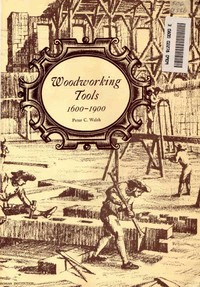
Woodworking Tools 1600-1900
Written by Peter C. Welsh
Chaptra reads alongside you — AI insights, chapter breakdowns and reader discussions for every book. Join free
About this book
Reading guide
Themes, characters and key ideas in Woodworking Tools 1600-1900, written by Chaptra AI.
- about 8 hours
- advanced
- Informative
- Historical
- Detailed
Peter C. Welsh's "Woodworking Tools 1600-1900" offers a meticulously researched historical account of the evolution of woodworking hand tools in the United States over three centuries. Published in the mid-20th century, the book delves into the specialization, configuration, and broader cultural context of these tools, tracing their transformation from the 17th to the early 20th century. Welsh explores how tools adapted to the demands of craftsmen and technical advancements, highlighting the challenges of historical documentation due to the loss of precise origins through continuous use. Ultimately, the work blends rigorous historical investigation with an appreciation for the aesthetic and functional design of these essential artifacts, emphasizing the importance of surviving museum pieces.
“The evolution of woodworking tools is a testament to the continuous interplay between human ingenuity and the demands of craft.”
Key themes
- The Evolution of Technology and Design
- This is the central theme, exploring how woodworking tools transformed over three centuries in response to technical advancements, changing craftsmanship demands, and evolving materials. Welsh details the gradual process of innovation, specialization, and refinement in tool configuration and function.
- Craftsmanship and Human Ingenuity
- The book highlights the symbiotic relationship between the craftsman and his tools. It examines how tools enable skill and how the demands of skilled labor drive tool development. It celebrates the ingenuity of both the toolmakers and the users in shaping the material world.
- Material Culture and Historical Preservation
- Welsh emphasizes the importance of physical artifacts (the tools themselves) as primary historical sources, especially given the scarcity of written records. The book underscores the value of studying and preserving material culture to understand past societies, technologies, and daily lives.
Worth discussing
How does the evolution of woodworking tools reflect broader societal and economic changes in America from 1600-1900?
Chapter-by-chapter breakdowns, character arcs and the full thematic analysis come with a free account.
Discussions
No one has started one yet
Questions this book opens up
No discussions yet
Be the first to start a discussion about this book!
Sign up to start the discussionReviews
No reviews yet
Be the first to review this book!