
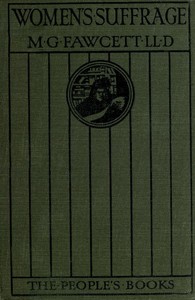
Women's Suffrage: A Short History of a Great Movement
Written by Millicent Garrett Fawcett
Chaptra reads alongside you — AI insights, chapter breakdowns and reader discussions for every book. Join free
About this book
Reading guide
Themes, characters and key ideas in Women's Suffrage: A Short History of a Great Movement, written by Chaptra AI.
- about 7 hours
- intermediate
- Informative
- Determined
- Historical
Millicent Garrett Fawcett's "Women's Suffrage: A Short History of a Great Movement" provides a concise yet comprehensive account of the British women's suffrage campaign from its nascent stages to its eventual triumph. Written by a leading figure of the constitutional suffrage movement, the book meticulously chronicles the decades-long struggle for women's political enfranchisement, highlighting the foundational work of early reformers like Mary Wollstonecraft and Elizabeth Fry. Fawcett details the systematic societal and legal barriers women faced, showcasing how persistent activism, parliamentary efforts, and public agitation gradually eroded opposition. The narrative emphasizes the strategic evolution of the movement, the resilience of its participants, and the ultimate realization of women's right to vote, presenting it as a vital chapter in the broader fight for equal rights and democratic principles.
“The demand for the enfranchisement of women is but the expression of a wider movement—the demand for the full and free development of women's personality.”
Key themes
- The Pursuit of Justice and Equality
- This is the overarching theme. Fawcett frames the suffrage movement as a fundamental struggle for justice, arguing that denying women the vote was an arbitrary and indefensible exclusion from basic human rights and democratic principles. She consistently emphasizes the moral imperative behind the demand for equal political status.
- Patience and Persistence in Social Change
- Fawcett's narrative strongly champions the power of long-term, sustained effort. She illustrates how decades of consistent advocacy, often facing ridicule and defeat, were necessary to gradually shift public opinion and legislative will. This theme underscores the incremental nature of profound social reform.
- The Role of Women in Public Life
- Beyond just the vote, the book explores how the suffrage movement challenged and ultimately transformed societal perceptions of women's capabilities and their appropriate sphere of action. It highlights women's increasing involvement in public service, education, and industry, demonstrating their capacity to contribute far beyond the domestic realm.
Worth discussing
How does Fawcett's position as a leader of the constitutional suffrage movement influence her narrative and interpretation of events?
Chapter-by-chapter breakdowns, character arcs and the full thematic analysis come with a free account.
Discussions
No one has started one yet
Questions this book opens up
No discussions yet
Be the first to start a discussion about this book!
Sign up to start the discussionReviews
No reviews yet
Be the first to review this book!