
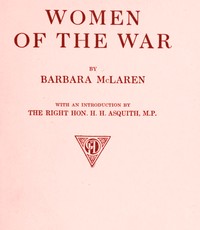
Women of the war
Written by Barbara McLaren
Chaptra reads alongside you — AI insights, chapter breakdowns and reader discussions for every book. Join free
About this book
Read it with a club
Chaptra's history and war clubs — small groups reading the same books and talking as they go.


Footnotes & Firefights
History and war
- 4 members
- 4 discussions
- Active 2d ago
Military history, from grand strategy down to the deeply boring logistics that actually decided everything. This is a Chaptra house club — set up and moderated by us to get the conversation going. Open to everyone; jump in anywhere.
Read Women of the war alongside people who are reading it too.
Also here: Empire, Reconsidered
Chaptra Prime — paid clubs, every club feature, and unlimited reading support, for $5 a month or $60 once.
See PrimeReading guide
Themes, characters and key ideas in Women of the war, written by Chaptra AI.
- about 8 hours
- intermediate
- Inspiring
- Historical
- Informative
Barbara McLaren's "Women of the War" is an early 20th-century historical account that meticulously documents the unprecedented roles and significant contributions of British women during World War I. The book moves beyond traditional narratives by spotlighting women's versatility and determination in fields previously dominated by men, including medical, agricultural, and industrial sectors. Through individual stories of figures like Dr. Garrett Anderson and Lady Paget, McLaren illustrates how these women not only supported the war effort but also fundamentally reshaped societal perceptions of female capability. Introduced by H. H. Asquith, the text establishes the profound impact of these efforts, aiming to honor their achievements and inspire future generations with their legacy of resilience and service.
“"The greatest war in history has called forth the greatest response from the women of our nation, proving their strength and versatility beyond all former measure."”
Key themes
- Gender Roles and Societal Change
- This is the central theme, exploring how WWI fundamentally disrupted and reshaped traditional gender expectations. The book highlights how women's entry into diverse fields, necessitated by wartime demands, irrevocably altered public perception of female capabilities and laid the groundwork for greater equality and suffrage movements.
- Duty and Patriotism
- The book emphasizes the overwhelming sense of national duty and patriotism that motivated women to contribute to the war effort. It portrays their actions as a selfless response to a national crisis, driven by a deep commitment to their country and a desire to support their servicemen.
- The Value of Overlooked Contributions
- The book's entire premise is to rectify the historical oversight of women's wartime contributions. It argues that the war effort would have been impossible without their widespread participation, underscoring the importance of recognizing and valuing the work of all societal members, especially those historically marginalized.
Worth discussing
How did WWI act as a catalyst for changing gender roles in British society, and what was the lasting impact of these changes?
Chapter-by-chapter breakdowns, character arcs and the full thematic analysis come with a free account.
Discussions
No one has started one yet
Questions this book opens up
No discussions yet
Be the first to start a discussion about this book!
Sign up to start the discussionReviews
No reviews yet
Be the first to review this book!