
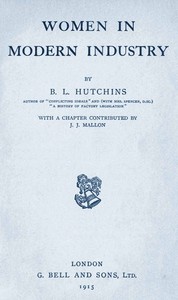
Women in Modern Industry
Written by B. L. Hutchins
Chaptra reads alongside you — AI insights, chapter breakdowns and reader discussions for every book. Join free
About this book
Reading guide
Themes, characters and key ideas in Women in Modern Industry, written by Chaptra AI.
- about 8 hours
- advanced
- informative
- analytical
- serious
B. L. Hutchins' "Women in Modern Industry" is a seminal early 20th-century socio-economic treatise that meticulously explores the evolving roles of women in the labor force, particularly in the wake of the Industrial Revolution and World War I. The work aims to shed light on the historically overlooked contributions of working women, analyzing the complex interplay of social, economic, and historical factors that shaped their employment and wages. Hutchins emphasizes the necessity of understanding women's labor within the context of major societal shifts, asserting their increasing and essential economic importance. Drawing upon existing research, the book provides a framework for addressing the challenges and expectations faced by women workers in modern industrial society.
“The growth of women's labor has long been overlooked.”
Key themes
- Women's Role in the Labor Force
- This theme is central to the entire treatise, exploring how women's involvement in the workforce changed dramatically from pre-industrial times through the Industrial Revolution and World War I. Hutchins analyzes the types of jobs women held, their working conditions, and the societal implications of their increasing participation in paid labor.
- Economic Contribution and Wages
- Hutchins meticulously examines the economic value of women's labor, often contrasting it with the wages they received. This theme delves into the disparities in pay, the economic necessity for women to work, and the broader impact of their contributions on national and industrial economies, arguing against the historical undervaluation of their work.
- Impact of the Industrial Revolution and World War I
- This theme explores how major historical events served as catalysts for significant shifts in women's employment. The Industrial Revolution created new forms of labor and drew women into factories, while World War I temporarily opened up traditionally male-dominated roles, profoundly altering the landscape of women's work and societal expectations.
Worth discussing
How does Hutchins' analysis of women's labor in the early 20th century resonate with contemporary discussions about gender pay gaps and workplace equality?
Chapter-by-chapter breakdowns, character arcs and the full thematic analysis come with a free account.
Discussions
No one has started one yet
Questions this book opens up
No discussions yet
Be the first to start a discussion about this book!
Sign up to start the discussionReviews
No reviews yet
Be the first to review this book!