
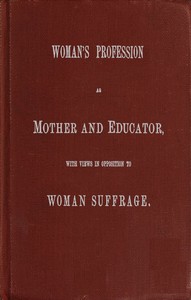
Woman's Profession as Mother and Educator, with Views in Opposition to Woman Suffrage
Written by Catharine Esther Beecher
Chaptra reads alongside you — AI insights, chapter breakdowns and reader discussions for every book. Join free
About this book
Reading guide
Themes, characters and key ideas in Woman's Profession as Mother and Educator, with Views in Opposition to Woman Suffrage, written by Chaptra AI.
- about 8 hours
- advanced
- didactic
- earnest
- persuasive
Catharine E. Beecher's "Woman's Profession as Mother and Educator" is a foundational 19th-century treatise advocating for a distinct and elevated domestic sphere for women. Beecher argues that women's primary, divinely ordained profession lies in nurturing and educating future generations, a role she deems essential for societal stability and moral health. Simultaneously, she presents a comprehensive critique of the burgeoning women's suffrage movement, viewing it as a dangerous diversion from women's crucial responsibilities within the home. The work emphasizes the need for specialized education for women in domestic science, health, and child-rearing to empower them within their traditional roles, rather than through political activism.
“The grand mission of woman is to train the young, and to make the home a place of purity, peace, and love.”
Key themes
- The Domestic Sphere as Woman's Profession
- Beecher argues that women's divinely appointed and most vital role is within the home, specifically as mothers and educators. She elevates this domestic work to a 'profession,' emphasizing its critical importance for moral upbringing, health, and societal stability. This theme is central to her entire argument, defining women's identity and purpose.
- Opposition to Woman Suffrage
- A core tenet of the book is Beecher's strong opposition to women's political enfranchisement. She argues that suffrage would distract women from their primary domestic duties, introduce discord into family life, corrupt women's moral purity by exposing them to the perceived coarseness of politics, and ultimately undermine the natural order of society. This theme is presented as a defense of traditional gender roles and societal harmony.
- Education as Empowerment (within prescribed roles)
- Beecher is a staunch advocate for women's education, but it is a specific kind of education aimed at enhancing their effectiveness within their 'profession' as mothers and educators. She champions curricula focused on domestic science, health, hygiene, child psychology, and moral instruction. This theme highlights her belief that proper training, rather than political rights, is the true path to women's empowerment and societal influence.
Worth discussing
How does Beecher define 'woman's profession,' and what implications does this definition have for women's agency and societal roles?
Chapter-by-chapter breakdowns, character arcs and the full thematic analysis come with a free account.
Discussions
No one has started one yet
Questions this book opens up
No discussions yet
Be the first to start a discussion about this book!
Sign up to start the discussionReviews
No reviews yet
Be the first to review this book!