
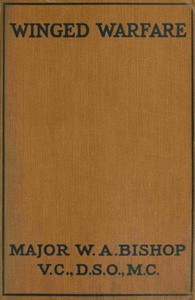
Winged warfare : $b Hunting the Huns in the air
Written by William Avery Bishop
Chaptra reads alongside you — AI insights, chapter breakdowns and reader discussions for every book. Join free
About this book
Reading guide
Themes, characters and key ideas in Winged warfare : $b Hunting the Huns in the air, written by Chaptra AI.
- about 8 hours
- intermediate
- intense
- thrilling
- historical
Winged Warfare is the gripping memoir of William Avery Bishop, one of Canada's most celebrated flying aces of World War I. The book chronicles Bishop's journey from a hesitant ground observer to a fearless fighter pilot, detailing his numerous aerial victories and the evolution of air combat tactics. It offers a firsthand account of the exhilarating dogfights, the constant danger, and the unique camaraderie among pilots on the Western Front. More than just a record of kills, the memoir provides a poignant look into the psychological toll of war and the paradoxical 'romance' of early aviation, making it a foundational text in WWI literature.
“It is a life of constant battle, of sudden death, of magnificent thrills, of glorious victory, and of a never-ending fight against fear.”
Key themes
- Heroism and Courage
- The memoir extensively explores the concept of heroism through Bishop's personal acts of extraordinary bravery and skill in aerial combat. It delves into the nature of courage, not as an absence of fear, but as the ability to act decisively and effectively despite constant mortal danger. Bishop's narrative highlights the individualistic heroism of the early fighter pilot, often engaging multiple enemies alone.
- The Romance and Brutality of War
- Bishop's memoir captures the unique paradox of World War I aerial combat: a blend of perceived chivalry and adventure (the 'romance') alongside the grim, lethal reality ('brutality'). While ground warfare was mired in trenches, air combat offered a sense of individual duels and freedom. However, this 'romance' was constantly juxtaposed with the high stakes, sudden death, and the dehumanization of the enemy.
- Technological Evolution and Its Impact on Warfare
- The book vividly illustrates the rapid advancements in aviation technology during WWI and how these changes dramatically reshaped military strategy and combat tactics. Bishop's narrative reflects the shift from rudimentary observation planes to specialized, heavily armed fighter aircraft, showcasing humanity's ingenuity in developing new tools for destruction.
Worth discussing
How does Bishop's account challenge or confirm popular perceptions of WWI aerial combat and the 'flying ace'?
Chapter-by-chapter breakdowns, character arcs and the full thematic analysis come with a free account.
Discussions
No one has started one yet
Questions this book opens up
No discussions yet
Be the first to start a discussion about this book!
Sign up to start the discussionReviews
No reviews yet
Be the first to review this book!