
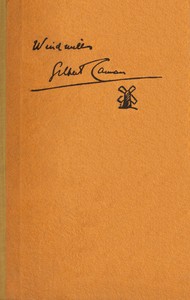
Windmills: A book of fables
Written by Gilbert Cannan
Chaptra reads alongside you — AI insights, chapter breakdowns and reader discussions for every book. Join free
About this book
Reading guide
Themes, characters and key ideas in Windmills: A book of fables, written by Chaptra AI.
- about 8 hours
- intermediate
- satirical
- philosophical
- poignant
Gilbert Cannan's "Windmills: A Book of Fables" is an early 20th-century collection of satirical fables that critically examines themes of war, society, and love, heavily influenced by the backdrop of World War I. The narrative centers on George Samways, an isolated islander whose philosophical musings on his world are interrupted by the arrival of a Bishop and the enchanting Arabella. These encounters propel George from his solitary existence into a complex tapestry of human relationships and the overarching conflict of love and war. Through George's journey, the book invites readers to reflect on profound existential questions and the inherent futility of conflict, maintaining a unique balance between lightheartedness and poignant social commentary.
“No specific quotes are available without access to the text, but expect poignant observations on the human condition, the absurdity of conflict, and the search for meaning.”
Key themes
- The Futility of War
- Central to the book, especially given its WWI context, this theme explores the senselessness and destructive nature of armed conflict. Through satirical fables, Cannan critiques the societal mechanisms, ideologies, and human failings that lead to war, and highlights its devastating impact on individuals and civilization. George's eventual embroilment in a 'grander tale of love and war' forces him to confront this futility directly.
- Societal Critique and Satire
- Cannan uses the fable format to satirize and critique various aspects of early 20th-century society, including its institutions, values, and human follies. This theme involves questioning established norms, exposing hypocrisy, and highlighting the disconnect between individual experience and collective delusion. The interactions between George, the Bishop, and Arabella often serve as vehicles for this critique.
- Isolation vs. Engagement
- This theme is embodied by George Samways's journey from his solitary existence on an isolated island to his eventual embroilment in the 'grander tale of love and war.' It explores the human tendency to retreat from the world versus the necessity of engagement, and the profound changes that occur when one is forced to confront external realities. It questions the value of philosophical introspection in the face of overwhelming societal upheaval.
Worth discussing
How does the fable format enhance or limit Cannan's critique of war and society?
Chapter-by-chapter breakdowns, character arcs and the full thematic analysis come with a free account.
Discussions
No one has started one yet
Questions this book opens up
No discussions yet
Be the first to start a discussion about this book!
Sign up to start the discussionReviews
No reviews yet
Be the first to review this book!