
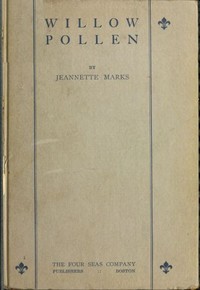
Willow Pollen
Written by Jeannette Augustus Marks
Chaptra reads alongside you — AI insights, chapter breakdowns and reader discussions for every book. Join free
About this book
Reading guide
Themes, characters and key ideas in Willow Pollen, written by Chaptra AI.
- about 8 hours
- intermediate/advanced
- Lyrical
- Reflective
- Poignant
Jeannette Augustus Marks's "Willow Pollen" is a poignant collection of early 20th-century American poetry, delving into the intricate relationship between human emotion and the natural world. Through vivid imagery and lyrical language, Marks explores universal themes of nature's beauty and ephemerality, the bittersweet nature of love and loss, and the enduring power of memory. The poems often personify natural elements, transforming them into confidants for the speaker's introspective journey. This collection serves as a lyrical exploration of life's complexities, inviting readers to connect with their own experiences of beauty, sorrow, and the solace found in the landscape.
“The willow's gold, a dust of fleeting grace, / Adorns the air, then leaves no lasting trace.”
Key themes
- Nature's Solace and Ephemerality
- This theme explores how the natural world serves as both a source of profound beauty and comfort, and a stark reminder of life's transient nature. Marks uses the cycles of nature—blooming, fading, seasons—to mirror human experiences of joy and sorrow, growth and decay. Nature offers solace and a mirror for introspection, but also underscores the impermanence of all things, including love and life itself.
- Love and Loss
- Marks deeply explores the complexities of love, often with a focus on past affections and the lingering impact of loss. The poems convey the bittersweet nature of memory, where love, even when lost, continues to shape the speaker's present emotional landscape. This theme often intertwines with nature, as landscapes or specific natural elements become imbued with the memory of a beloved person or a past relationship.
- The Passage of Time and Memory
- The collection consistently meditates on the relentless flow of time and its impact on human experience, particularly how memory preserves, distorts, or re-colors past events. Marks examines how the present is constantly informed by the past, and how the speaker grapples with the inevitability of change and the longing for what once was. Memory is not just recollection but an active force shaping identity and perception.
Worth discussing
How does Marks use specific elements of nature (like willow pollen, blossoms, rivers) to symbolize human emotions or experiences?
Chapter-by-chapter breakdowns, character arcs and the full thematic analysis come with a free account.
Discussions
No one has started one yet
Questions this book opens up
No discussions yet
Be the first to start a discussion about this book!
Sign up to start the discussionReviews
No reviews yet
Be the first to review this book!