
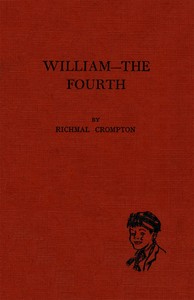
William—the fourth
Written by Richmal Crompton
Chaptra reads alongside you — AI insights, chapter breakdowns and reader discussions for every book. Join free
About this book
Reading guide
Themes, characters and key ideas in William—the fourth, written by Chaptra AI.
- about 8 hours
- intermediate
- humorous
- whimsical
- adventurous
William—the fourth by Richmal Crompton continues the delightful escapades of William Brown, an irrepressible young boy navigating the complexities of the early 20th-century world with his unique, often chaotic, perspective. This installment particularly highlights William's innocent yet profound interpretations of adult concepts, as he stumbles into a socialist meeting and decides to form his own 'Junior Branch of the Bolshevist Society.' His subsequent attempts to implement equality and confront societal structures lead to a series of humorous misunderstandings and misadventures with his peers and the exasperated adults around him. The book offers a charming blend of childhood mischief, social satire, and a timeless exploration of freedom and individuality through the eyes of its iconic protagonist.
“"Action! That's what's needed. Not just talk. Action!"”
Key themes
- Childhood Innocence vs. Adult World
- This is the central theme of the entire series. William's perspective is one of pure, unadulterated childhood logic, which often clashes humorously with the complex, hypocritical, or rigid rules of the adult world. His innocence allows him to interpret complex ideas like socialism literally and directly, leading to chaos but also revealing the absurdities of adult conventions.
- Freedom and Rebellion
- William embodies the spirit of unbridled freedom and a natural rebellion against rules, authority, and convention. His entire existence is a rejection of the constraints imposed by adults. This theme celebrates the adventurous, independent spirit of childhood and its inherent resistance to being 'tamed' or conforming to societal expectations.
- Social Commentary and Class
- Sparked by William's exposure to socialist ideas, the book subtly explores themes of social class and economic inequality. William's attempts to create 'equality' among children, though naive, highlight the arbitrary nature of wealth and privilege from a child's perspective. Crompton uses William's antics to gently satirize the class structures and political ideologies of early 20th-century England.
Worth discussing
How does William's interpretation of 'equality' and 'socialism' differ from adult understanding, and what does this reveal about childhood logic?
Chapter-by-chapter breakdowns, character arcs and the full thematic analysis come with a free account.
Discussions
No one has started one yet
Questions this book opens up
No discussions yet
Be the first to start a discussion about this book!
Sign up to start the discussionReviews
No reviews yet
Be the first to review this book!