
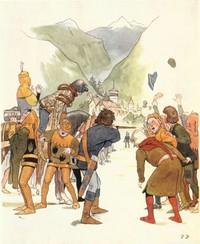
William Tell Told Again
Written by P. G. (Pelham Grenville) Wodehouse
Chaptra reads alongside you — AI insights, chapter breakdowns and reader discussions for every book. Join free
About this book
Reading guide
Themes, characters and key ideas in William Tell Told Again, written by Chaptra AI.
- about 8 hours
- intermediate
- humorous
- uplifting
- adventurous
P. G. Wodehouse's "William Tell Told Again" offers a delightfully humorous and lighthearted reimagining of the classic Swiss legend. Blending elements of children's literature with Wodehouse's signature wit, the book chronicles the rebellion of the Swiss people against the tyrannical Governor Gessler, with William Tell emerging as their unlikely, sharpshooting champion. Through a series of absurd challenges, including the infamous apple shot, Tell's defiance ignites a spirit of resistance that ultimately leads to Gessler's downfall and the liberation of Switzerland. The narrative cleverly interweaves prose, verse, and illustrations, making the timeless tale engaging and accessible for both young and adult readers.
“"It is an odd thing, but the more you try to make people bow, the less they seem inclined to do it."”
Key themes
- Tyranny vs. Freedom
- This is the central conflict of the story, explored through Governor Gessler's oppressive rule and the Swiss people's struggle for independence. Wodehouse humorously portrays the absurdity of tyranny, making the fight for freedom seem both righteous and ultimately inevitable, rather than grim. The hat on the pole serves as a direct symbol of imposed servitude.
- The Power of Wit and Defiance
- Wodehouse highlights how defiance, often expressed through quiet refusal or clever action rather than outright aggression, can undermine even the most formidable authority. Tell's defiance isn't a grand speech but a simple act of non-compliance, magnified by his skill. The humor itself acts as a form of defiance against the gravity of oppression.
- Heroism and the Common Man
- The story positions William Tell not as a noble or a military leader, but as an ordinary peasant whose exceptional skill and moral integrity transform him into an accidental hero. His actions are driven by personal affront and the protection of his family, which then galvanize a nation. This emphasizes that heroism can emerge from unexpected places and from deeply personal motivations.
Worth discussing
How does Wodehouse's humorous approach affect the traditional understanding of the William Tell legend?
Chapter-by-chapter breakdowns, character arcs and the full thematic analysis come with a free account.
Discussions
No one has started one yet
Questions this book opens up
No discussions yet
Be the first to start a discussion about this book!
Sign up to start the discussionReviews
No reviews yet
Be the first to review this book!