
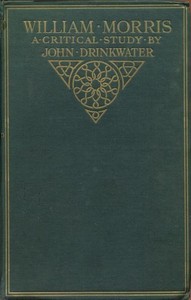
William Morris: A Critical Study
Written by John Drinkwater
Chaptra reads alongside you — AI insights, chapter breakdowns and reader discussions for every book. Join free
About this book
Reading guide
Themes, characters and key ideas in William Morris: A Critical Study, written by Chaptra AI.
- about 8 hours
- advanced
- analytical
- scholarly
- reflective
John Drinkwater's "William Morris: A Critical Study" offers an early 20th-century examination of William Morris's multifaceted contributions as a poet, designer, and socialist. The study uniquely positions Morris's art not merely as a reflection of his Victorian era, but as a distinct commentary born from his individual vision and personality. Drinkwater meticulously traces Morris's early influences and formative experiences, demonstrating how these shaped his enduring artistic philosophy. The analysis delves into the profound themes of beauty, labor, and social consciousness that are intricately woven throughout Morris's literary and artistic output, highlighting the complex interplay between personal expression and broader societal engagement.
“"The poet, though steeped in the human experience of his age, ultimately distills a unique commentary from the alembic of his own vision and personality."”
Key themes
- The Nature of Poetic/Artistic Vision
- Drinkwater opens his study with the fundamental argument that a poet's art is not merely a reflection of its time but a unique commentary stemming from the individual's vision and personality. This theme explores the autonomy and originality of the creative spirit, emphasizing how personal experiences and innate genius shape artistic output, even when deeply engaged with societal concerns.
- Artist, Era, and Social Engagement
- This theme explores the intricate relationship between William Morris's artistic and social contributions and the historical context of the late 19th century. Drinkwater analyzes how Morris engaged with the challenges of industrialization, the decline of craftsmanship, and the social inequalities of his time, not just through his art but also through his activism, demonstrating a profound commitment to societal betterment.
- Beauty, Craftsmanship, and Labor
- Central to Morris's philosophy, and Drinkwater's analysis, is the belief in the inherent connection between beauty, honest labor, and the value of handcrafted objects. This theme investigates Morris's advocacy for a return to artisanal methods, his critique of the dehumanizing effects of industrial production, and his vision of a society where work is joyful and produces objects of intrinsic aesthetic and functional worth.
Worth discussing
How does Drinkwater's early 20th-century perspective shape his interpretation of Morris, and how might a contemporary critic approach the same subject differently?
Chapter-by-chapter breakdowns, character arcs and the full thematic analysis come with a free account.
Discussions
No one has started one yet
Questions this book opens up
No discussions yet
Be the first to start a discussion about this book!
Sign up to start the discussionReviews
No reviews yet
Be the first to review this book!