
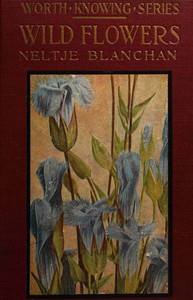
Wild Flowers Worth Knowing
Written by Neltje Blanchan
Chaptra reads alongside you — AI insights, chapter breakdowns and reader discussions for every book. Join free
About this book
Reading guide
Themes, characters and key ideas in Wild Flowers Worth Knowing, written by Chaptra AI.
- about 10 hours
- intermediate
- informative
- appreciative
- educational
Neltje Blanchan's "Wild Flowers Worth Knowing" is an early 20th-century comprehensive guidebook designed to cultivate a deeper understanding and appreciation for wildflowers. The book meticulously details various species, exploring their distinct characteristics, natural habitats, and crucial ecological roles. Through an engaging preface, Blanchan establishes the text's purpose: to highlight not only the aesthetic beauty of flora but also their vital mechanisms for perpetuation and adaptation, drawing philosophical parallels to human existence. It serves as an informative journey through nature's garden, inviting readers to connect intimately with the diverse and resilient plant life surrounding them, ultimately fostering a sense of environmental stewardship.
“To truly know a wild flower is to understand not only its form and color, but the intricate dance it performs with sun, soil, and creature for its very existence.”
Key themes
- Appreciation of Nature's Beauty and Intricacy
- This is the foundational theme, explicitly stated in the preface. Blanchan aims to move readers beyond superficial observation to a deep admiration for the aesthetic and structural beauty of wildflowers. This appreciation extends to understanding the intricate biological mechanisms that allow them to thrive, highlighting the delicate perfection in their design and function.
- Adaptation and Survival
- A core scientific theme, this explores the myriad ways wildflowers have evolved to survive and reproduce in diverse and often challenging environments. Blanchan details mechanisms such as specialized pollination strategies, seed dispersal methods, defensive structures against herbivores, and physiological adaptations to climate and soil conditions. This theme underscores nature's relentless drive for perpetuation.
- Ecological Interconnectedness
- Blanchan implicitly and explicitly explores how wildflowers are not isolated entities but integral parts of larger ecosystems. This theme highlights the relationships between plants and their environment – soil, water, sunlight – as well as their interactions with other living organisms, particularly pollinators and herbivores. It emphasizes the delicate balance and mutual dependencies within nature.
Worth discussing
How does Blanchan's approach to describing wildflowers foster a sense of appreciation beyond mere scientific classification?
Chapter-by-chapter breakdowns, character arcs and the full thematic analysis come with a free account.
Discussions
No one has started one yet
Questions this book opens up
No discussions yet
Be the first to start a discussion about this book!
Sign up to start the discussionReviews
No reviews yet
Be the first to review this book!