
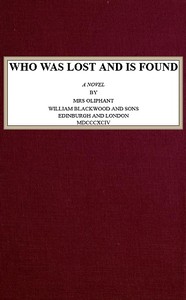
Who Was Lost and Is Found: A Novel
Written by Mrs. (Margaret) Oliphant
Chaptra reads alongside you — AI insights, chapter breakdowns and reader discussions for every book. Join free
About this book
Reading guide
Themes, characters and key ideas in Who Was Lost and Is Found: A Novel, written by Chaptra AI.
- about 8 hours
- intermediate
- melancholic
- hopeful
- introspective
Mrs. Oliphant's "Who Was Lost and Is Found" is a poignant late 19th-century novel centered on Mrs. James Ogilvy, a respected villager in Eskholm, as she endures years of quiet solitude marked by the mysterious disappearance of her son, Robert. The narrative intimately portrays her daily routines and internal struggles, highlighting her unwavering hope and the profound emotional landscape shaped by his absence. As the story unfolds, it delves into the complexities of motherhood and longing, setting the stage for Robert's eventual return which promises to bring both immense joy and unforeseen challenges to her serene, yet deeply anxious, existence. The novel explores the psychological depth of waiting and the intricate dynamics of familial reconciliation.
“"The quietude of Eskholm was but a thin veil over the ceaseless stir of Mrs. Ogilvy's heart, where hope, a fragile thing, yet stubbornly bloomed."”
Key themes
- Motherhood and Unwavering Longing
- This theme is central to the novel, exploring the profound and enduring nature of a mother's love. Mrs. Ogilvy's unwavering hope and her constant yearning for Robert's return illustrate the deep psychological and emotional landscape of motherhood, particularly when faced with absence and uncertainty. It delves into how a mother sustains herself through grief and anticipation, making her son's return the ultimate focal point of her existence.
- Absence, Anticipation, and Return
- The novel powerfully explores the psychological weight of absence—how an unresolved disappearance can shape an individual's entire life. It then builds palpable tension around the anticipation of return, suggesting that such a reunion is not a simple joyous event but a complex process of renegotiation, potentially bringing both profound joy and unforeseen difficulties. It questions what it means to be 'found' after being 'lost' for so long, both for the individual returning and for those who waited.
- Quiet Strength and Resilience in Domestic Life
- Through Mrs. Ogilvy, Oliphant examines the quiet strength and remarkable resilience often found within the domestic sphere, particularly among women in the Victorian era. Despite her profound personal sorrow, Mrs. Ogilvy maintains her routines, her dignity, and her place in the community. This theme highlights the inner fortitude required to navigate personal tragedy while upholding societal expectations and maintaining the fabric of daily life.
Worth discussing
How does Mrs. Ogilvy's quiet strength manifest, and what does it reveal about the nature of female resilience in the Victorian era?
Chapter-by-chapter breakdowns, character arcs and the full thematic analysis come with a free account.
Discussions
No one has started one yet
Questions this book opens up
No discussions yet
Be the first to start a discussion about this book!
Sign up to start the discussionReviews
No reviews yet
Be the first to review this book!