
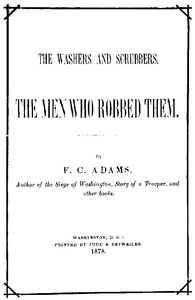
"White man bery unsartin": "Nigger haint got no friends, no how"; the blackest chapter in the history of the Republican Party; the men who robbed and combined to rob the freedmen of their hard earnings.
Written by F. Colburn (Francis Colburn) Adams
Chaptra reads alongside you — AI insights, chapter breakdowns and reader discussions for every book. Join free
About this book
Read it with a club
Small groups reading the same books and talking as they go.


News
- 4 members
- 1,813 discussions
- Active Sep 11
Read "White man bery unsartin": "Nigger haint got no friends, no how"; the blackest chapter in the history of the Republican Party; the men who robbed and combined to rob the freedmen of their hard earnings. alongside people who are reading it too.
Also here: News Bulletin, Just Joking....
Chaptra Prime — paid clubs, every club feature, and unlimited reading support, for $5 a month or $60 once.
See PrimeReading guide
Themes, characters and key ideas in "White man bery unsartin": "Nigger haint got no friends, no how"; the blackest chapter in the history of the Republican Party; the men who robbed and combined to rob the freedmen of their hard earnings., written by Chaptra AI.
- about 8 hours
- advanced
- dark
- accusatory
- disillusioned
F. Colburn Adams's "White man bery unsartin": "Nigger haint got no friends, no how" is a searing historical critique that exposes what the author deems "the blackest chapter in the history of the Republican Party." Published in the post-Reconstruction era, this polemic argues that specific individuals and political factions within the Republican Party systematically robbed newly emancipated African Americans (freedmen) of their hard-earned wages and economic opportunities. The book uses stark, often derogatory, language to convey the profound disillusionment and betrayal felt by freedmen, portraying a devastating failure of political promises and a pervasive system of economic exploitation. It serves as an indictment of the corruption and racial injustice that marred the Reconstruction period.
“"White man bery unsartin."”
Key themes
- Racial Injustice and Systemic Racism
- This theme is paramount, exploring how the newly acquired freedom of African Americans was systematically undermined by discriminatory practices and attitudes. The book argues that economic exploitation was a direct continuation of racial oppression, manifesting in fraudulent schemes and unequal treatment that specifically targeted Black individuals due to their race and vulnerable social status.
- Political Corruption and Betrayal
- The core of Adams's critique, this theme examines how those in positions of power, particularly within the Republican Party, allegedly betrayed their constituents and the ideals of emancipation for personal gain. It details how political influence, legislative loopholes, and official negligence facilitated widespread fraud and exploitation, demonstrating a profound moral failing within the political system.
- Economic Exploitation
- This theme focuses on the specific mechanisms and consequences of the alleged robbery of freedmen's wealth. It delves into the economic systems and practices—such as fraudulent contracts, usurious interest rates, land grabs, and wage theft—that prevented Black Americans from achieving economic independence and accumulating generational wealth after slavery. It argues that this exploitation was a deliberate and widespread strategy.
Worth discussing
How does Adams's book reflect the political and racial tensions of the post-Reconstruction era?
Chapter-by-chapter breakdowns, character arcs and the full thematic analysis come with a free account.
Discussions
No one has started one yet
Questions this book opens up
No discussions yet
Be the first to start a discussion about this book!
Sign up to start the discussionReviews
No reviews yet
Be the first to review this book!