
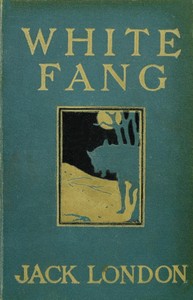
White Fang
Written by Jack London
Chaptra reads alongside you — AI insights, chapter breakdowns and reader discussions for every book. Join free
About this book
Reading guide
Themes, characters and key ideas in White Fang, written by Chaptra AI.
- about 10 hours
- intermediate
- dark
- adventurous
- intense
Jack London's "White Fang" is a powerful novel chronicling the arduous life of a wolf-dog hybrid born in the unforgiving Yukon wilderness. The narrative follows White Fang's journey from a savage pup governed by instinct and the "law of the wild" to his eventual, complex transformation through various human masters. It is a profound exploration of survival, the shaping influence of environment and experience, and the gradual evolution of loyalty and love in a creature initially driven solely by aggression and self-preservation. Ultimately, the story culminates in White Fang's domestication and his embrace of a new, civilized existence, highlighting the enduring capacity for change and connection.
“"The Law of the Wild was to prey and be preyed upon."”
Key themes
- Nature vs. Nurture
- This is the central theme of the novel, exploring how White Fang's inherent wolf nature (instinct, aggression, self-reliance) interacts with and is shaped by his environment and experiences (nurture). London meticulously details how each interaction, from the wild to his various human masters, molds White Fang's personality and behavior, questioning whether an individual's destiny is predetermined or can be altered by external influences.
- Survival of the Fittest
- Rooted in London's naturalistic worldview, this theme emphasizes the relentless struggle for existence in the wild, where only the strongest, most cunning, and adaptable creatures survive. White Fang's early life is a constant testament to this Darwinian principle, as he must fight, hunt, and outwit to avoid becoming prey himself. This theme highlights the brutal, unsentimental aspects of nature.
- The Law of the Wild vs. The Law of Civilization
- This theme contrasts the instinctual, brutal, and often amoral 'law' that governs the wilderness with the more structured, moral, and sometimes hypocritical 'laws' of human society. White Fang's journey is a transition between these two systems, revealing the complexities and contradictions of both, and how an individual must adapt to survive in either.
Worth discussing
How does London use White Fang's experiences to explore the 'nature versus nurture' debate? What conclusions does the novel seem to draw?
Chapter-by-chapter breakdowns, character arcs and the full thematic analysis come with a free account.
Discussions
No one has started one yet
Questions this book opens up
No discussions yet
Be the first to start a discussion about this book!
Sign up to start the discussionReviews
No reviews yet
Be the first to review this book!